Old School Meets New Feed: How Veteran Pin-Up Photographers Are Passing the Torch

Photo: Label Ancre, CC BY-SA 3.0, via Wikimedia Commons
There's a certain kind of magic that happens when a veteran pin-up photographer hands a young artist a contact sheet for the first time. Not a Lightroom catalog. Not a shared Google Drive folder. An actual contact sheet — the kind you'd pull from a chemical bath under a dim amber light, squinting at tiny frames to find the one that made everything click.
That ritual is becoming rarer. But it's not gone. And the photographers who still swear by it are doing something quietly remarkable: they're teaching.
Across the country, a loose but growing network of mentorships is connecting digital-native photographers with artists who built their careers in the analog era. The goal isn't nostalgia. It's craft. And the pin-up world — with its rich visual tradition rooted in the golden age of American illustration and mid-century glamour photography — turns out to be a surprisingly fertile ground for this kind of knowledge transfer.
Why the Darkroom Still Matters
Ask any photographer who learned on film and they'll tell you the same thing: shooting on a digital sensor with unlimited takes is a completely different psychological experience than loading a 36-exposure roll and knowing every frame costs something. That constraint, veterans argue, builds a discipline that no amount of post-processing tutorials can replicate.
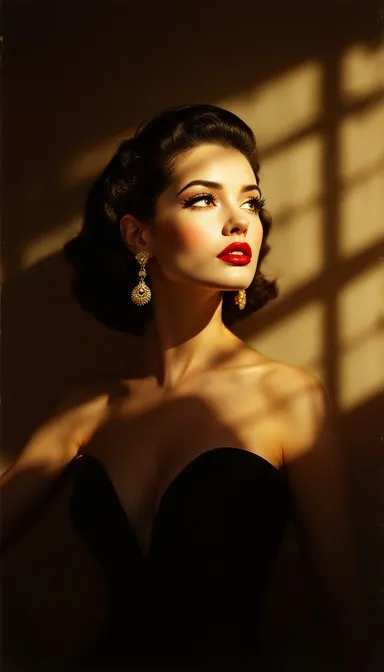
"When I was coming up, you had to commit to the light," says one veteran Los Angeles-based pin-up photographer who has been shooting in the genre for over three decades. "You couldn't fix it later. You had to understand what the light was doing to the subject's skin, how the shadows were falling across the curve of a shoulder, before you ever pressed the shutter. That's not a technical skill — it's a way of seeing."
That way of seeing is exactly what younger photographers are hungry for, even if they'll ultimately deliver their work as JPEGs optimized for a 1080-pixel Instagram grid. The aesthetic that dominates modern pin-up photography — that warm, slightly dreamy quality that reads as both retro and fresh — doesn't come from a preset. It comes from understanding how light actually behaves, and why the photographers of the 1940s and 50s made the choices they did.
The Mentorship Model: Informal, Intentional, and Surprisingly Effective
Most of these mentorships don't happen through formal programs. They happen at conventions, through shared studio spaces, or after someone slides into a DM with a genuine question and a portfolio that shows real promise. The pin-up photography community in the US has always had a strong collaborative culture — it's part of what makes it distinct from more competitive corners of the industry — and that culture is what makes this kind of knowledge transfer possible.
What veteran photographers typically offer isn't just technical instruction. It's context. Understanding why certain poses became iconic, what the relationship between photographer and model looked like in the studio of a mid-century photographer like Bunny Yeager or Peter Gowland, and how that dynamic evolved over decades — this is the kind of background that turns a competent technician into an artist with a genuine point of view.
For their part, the younger photographers bring things the veterans genuinely value: fluency with digital tools, an instinct for what resonates on social platforms, and a fresh perspective on representation and body diversity that's actively reshaping what contemporary pin-up looks like.
Adapting Classic Techniques for the Instagram Age
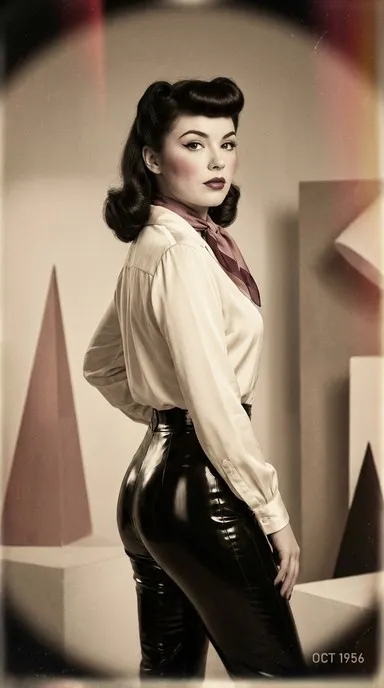
One of the more interesting conversations happening in these mentorships is about the tension between timelessness and timeliness. Classic pin-up photography was built around a very specific set of visual conventions — the coy over-the-shoulder glance, the exaggerated S-curve pose, the carefully choreographed reveal. Those conventions still work. But they work differently when the final image is going to live on a phone screen rather than a magazine spread or a calendar.
Veteran photographers talk about teaching their mentees to think about "the crop" — not just as a compositional choice, but as a storytelling decision. A full-length shot that works beautifully as a print might lose everything that makes it special when it's reduced to a square thumbnail. Learning to shoot with multiple end uses in mind, while still maintaining the integrity of the image, is a skill that didn't exist in the film era and requires a genuine rethinking of the classic approach.
At the same time, younger photographers are bringing darkroom-inspired techniques back into their digital workflows in ways that feel genuinely new. Grain simulation, split-toning, and careful attention to highlight roll-off — these are all digital approximations of analog processes, and they're being applied with a sophistication that wouldn't be possible without mentors who can explain what the original effect actually looked like and why it happened.
What Gets Lost (and What Doesn't)
Not everything translates. The patience required to work in a darkroom — the willingness to wait, to be wrong, to try again — is something that's genuinely hard to teach in a world where you can see your results in real time. Some veteran photographers express concern that the speed of digital workflow can encourage a kind of creative sloppiness, a tendency to shoot first and think later because the cost of a bad frame is essentially zero.
But they're also honest about what the new generation is getting right. The emphasis on collaboration, on making sure models feel safe and respected on set, on building a community rather than just a portfolio — these are values that the best of the old guard always held, but that are now being articulated more clearly and practiced more consistently than ever before.
The pin-up tradition has always been about celebrating a certain kind of bold, unapologetic beauty. The photographers who are doing the work of passing that tradition forward — in darkrooms, in shared studios, in DM conversations that stretch late into the night — are making sure that beauty keeps finding new ways to shine.