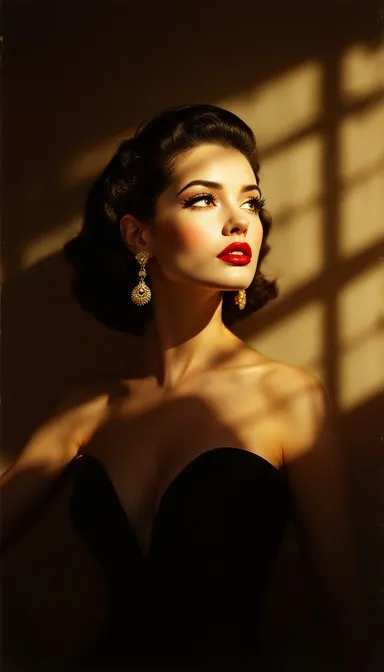
Strike a Pose: The Secrets Behind Stunning Pin-Up Photography
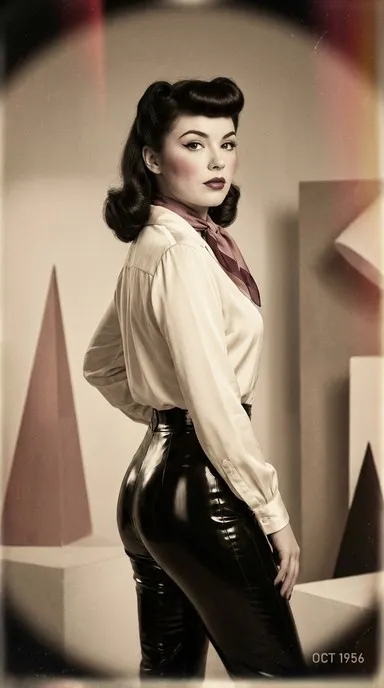
Photo: vintage pin-up photography studio lighting glamour pose retro, via images.stockcake.com
There's a reason certain pin-up photos stop you cold — that electric combination of confidence, composition, and light that makes an image feel alive. It looks effortless. It rarely is. Behind every iconic shot is a model who has put in serious work understanding her body, her relationship with the camera, and the technical alchemy that transforms a good photo into an unforgettable one.
At Pin-Up 999, we've seen thousands of images — the ones that sizzle and the ones that fall flat. The difference almost always comes down to a handful of skills that any dedicated model can develop. So let's break it down.
Your Body Is Your Instrument — Learn to Play It
Professional pin-up models treat posing like a musician treats an instrument. You don't just pick it up and start playing Carnegie Hall. You practice, you study, and you develop muscle memory for what works.
The first step is understanding your own geometry. Every body is different, and the most effective poses are the ones that work with your natural proportions rather than fighting them. That means spending time in front of a full-length mirror — not to critique yourself, but to observe. Which angles elongate your legs? How does shifting your weight to one hip change the silhouette? What happens when you drop a shoulder slightly toward the camera?
Classic pin-up poses have a built-in cheat sheet baked right into their history. Study the greats — the arched back, the over-the-shoulder glance, the playful kick of a heel. These weren't just pretty accidents. They were refined over decades by photographers and models who understood that the human eye is naturally drawn to curves, diagonals, and a sense of movement frozen in time. The S-curve, for instance, has been a staple since the pin-up genre's golden age because it creates visual flow that pulls the viewer through the entire frame.
Light Is Everything — And It's Not as Complicated as You Think
Lighting is where amateur photography most often goes wrong, and where professional work most obviously shines. For pin-up specifically, lighting isn't just functional — it's atmospheric. It sets the mood, sculpts the body, and tells the viewer how to feel.
Soft, diffused light — think a large window on an overcast day or a photographer's softbox — is a classic choice for a reason. It minimizes harsh shadows, smooths skin texture, and creates that warm, inviting glow associated with mid-century glamour. If you're working with a photographer, don't be shy about asking where the key light is coming from. Understanding that basic element helps you angle your face and body to catch the most flattering illumination.
Rembrandt lighting — where one side of the face is illuminated and a small triangle of light appears on the shadowed cheek — adds drama and depth without going full noir. It's a favorite for pin-up because it reads as both classic and cinematic. Meanwhile, ring lights, popularized in the social media era, create that signature catchlight in the eyes that makes a model look alert, engaged, and magnetic.
The key takeaway? Talk to your photographer before the shoot. Understand their lighting setup, walk through it, and don't be afraid to ask for adjustments. The best shoots are collaborative, not passive.
Building Real Confidence in Front of the Camera
Here's the truth nobody wants to admit: you can nail every technical element and still produce flat images if you don't bring genuine presence to the shoot. Confidence isn't something you fake — at least not convincingly. It's something you build.
For a lot of models, the first step is separating self-consciousness from self-awareness. Self-consciousness is the anxious internal monologue telling you you're being judged. Self-awareness is the calm, focused attention to how you're inhabiting your body and the space around you. The goal is to quiet the first and cultivate the second.
Practical strategies that actually work: shoot more. Even if it's just with your phone at home, regular time in front of a camera desensitizes you to the lens. Review your own images without harsh judgment — look for what's working, not just what isn't. Watch behind-the-scenes footage of professional shoots to normalize the process.
Many experienced pin-up models also swear by character work. Stepping into a persona — a 1950s bombshell, a classic Hollywood starlet, a playful girl-next-door — can create psychological distance from everyday insecurity and give you something concrete to embody. You're not just you standing in front of a camera; you're a character with an attitude, a story, and a point of view.
The Photographer Relationship: Collaboration Over Direction
The best pin-up photography happens when the model and photographer are genuinely working together. That means clear communication before, during, and after the shoot.
Before you ever step on set, have a detailed conversation about the creative vision. What's the mood? What references are you both drawing from? What wardrobe, props, and locations are in play? Establishing this shared language upfront means you're both pulling in the same direction when the camera starts clicking.
During the shoot, don't wait for the photographer to direct every single movement. Bring ideas. Try variations. Ask to see test shots periodically so you can make real-time adjustments. The models who produce the most consistently stunning work are the ones who treat a shoot as a creative conversation, not a performance review.
Afterward, study your images critically and constructively. What worked? What would you change? Each shoot is data that makes the next one better.
Study the History, Then Make It Your Own
Pin-up has a rich visual language built over nearly a century, and the models who understand that history have a genuine advantage. Bettie Page's playful defiance, Vargas's airbrushed idealism, the Elvgren girls' wholesome mischief — each era contributed something to the visual vocabulary that still resonates today.
But studying history doesn't mean copying it wholesale. The most compelling modern pin-up work takes those foundational elements — the poses, the lighting philosophy, the emphasis on personality — and filters them through a contemporary lens. Your individuality isn't a liability; it's the whole point.
At Pin-Up 999, we believe that the timeless appeal of pin-up photography lies in exactly that tension between classic and personal. The technical skills give you a foundation. The confidence gives you presence. And your authentic self gives the image something no formula can manufacture: a real human being who owns every inch of the frame.
That's the shot worth waiting for.