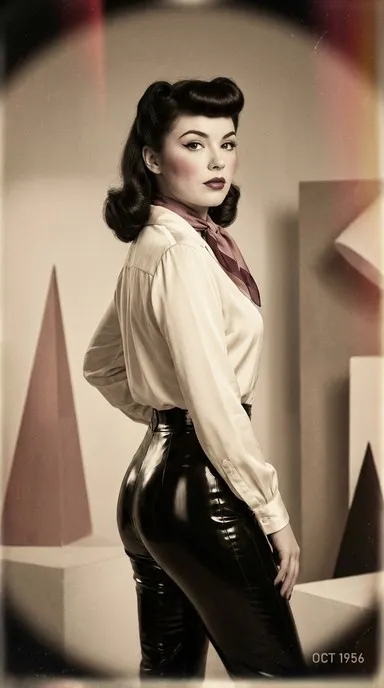
Bettie to Bytes: Why Pin-Up Culture Is More Alive Than Ever in the Social Media Era
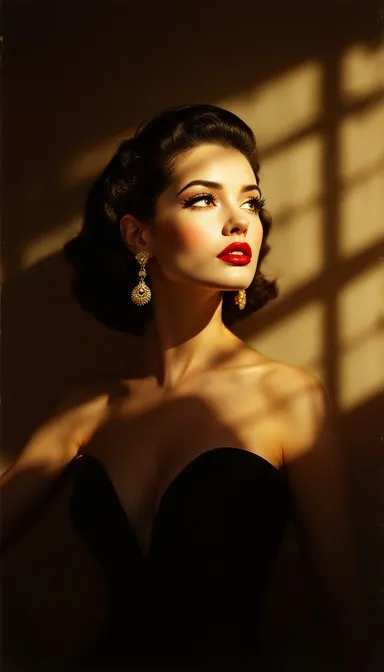
Photo: retro vintage glamour model social media aesthetic 1950s inspired photography, via images.stockcake.com
Somewhere between a Vargas painting in a 1945 calendar and a carefully curated Instagram Reel with a vintage filter, something interesting happened to pin-up culture. It didn't die. It didn't fade into the sepia-toned nostalgia bin alongside drive-in movies and sock hops. It mutated, adapted, and in many ways became more democratic and more diverse than its originators could have imagined.
But here's the thing — the why behind pin-up's endurance is worth unpacking, because it says a lot about what audiences are genuinely craving in a content landscape that's simultaneously oversaturated and somehow still starving for authenticity.
Where It All Started (And Why It Worked)
To understand where pin-up is going, you have to appreciate where it came from. The genre's golden age — roughly the 1940s through the early 1960s — was defined by a very specific cultural moment. America was emerging from the Depression and navigating World War II, and pin-up imagery offered something psychologically powerful: idealized beauty delivered with warmth, personality, and a wink.
These weren't cold, distant images. The Elvgren girls looked like they were about to laugh. Bettie Page looked like she was genuinely having the time of her life. The Varga Girls had an almost impossible softness to them. The common thread was approachability — a sense that beauty could be joyful and playful rather than intimidating or aspirational in a punishing way.
That emotional register is exactly what made pin-up resonate then, and it's a big part of why it still works now.
The Digital Democratization of Glamour
For most of the 20th century, pin-up was a professionally gatekept art form. You needed access to photographers, studios, publications, and distributors. The models who became household names — Bettie Page, Marilyn Monroe in her early career, the Playmates of the 1950s and 60s — did so through industry channels that were expensive, exclusive, and largely controlled by men.
The internet, and social media specifically, blew that gate right off its hinges.
Starting with early fan sites and forums in the late 1990s and accelerating dramatically with platforms like MySpace, Tumblr, Instagram, and eventually TikTok, anyone with a camera and a creative vision could start building an audience around pin-up aesthetics. Suddenly, the genre wasn't defined by a handful of magazine editors in New York or Los Angeles — it was being shaped by thousands of independent models, photographers, and enthusiasts all over the country.
This democratization brought something genuinely new to the table: representation. Classic pin-up was almost exclusively white, with extremely narrow body standards. The digital era opened the door to pin-up models of every body type, ethnicity, and gender expression, each bringing their own interpretation of the classic glamour formula. The result isn't a watered-down version of the original — it's a richer, more expansive genre that retains the vintage soul while speaking to a much wider audience.
Nostalgia as Currency in an Anxious Age
Here's where things get genuinely interesting from a cultural standpoint. Millennials and Gen Z — two generations that have grown up drowning in digital content, social comparison, and algorithmic manipulation — are demonstrably hungry for aesthetics that feel grounded in something real and pre-digital.
Vinyl records. Film photography. Vintage fashion. And yes, pin-up imagery.
There's a psychological comfort in aesthetics that have a clear history and a recognizable visual language. When everything online feels disposable and manufactured for engagement metrics, something that carries the weight of a genuine artistic tradition feels almost radical in its authenticity. Pin-up's visual vocabulary — the retro typography, the saturated color palettes, the deliberate composition — signals intentionality in a way that a hastily shot selfie simply can't.
This isn't just abstract theorizing. Look at the numbers. Vintage-inspired hashtags consistently outperform their contemporary equivalents in engagement rates. Retro aesthetic content on TikTok generates billions of views. The cottagecore, dark academia, and vintage glamour micro-trends that have dominated social media for the past several years all share the same underlying psychology: a desire for beauty that feels considered rather than reactive.
What's Changed — And What Hasn't
It would be dishonest to pretend that pin-up in the digital age is just the 1950s in a new package. Some things have genuinely shifted.
The relationship between model and audience is fundamentally different. Classic pin-up was a one-way broadcast — the image went out, the audience received it, and the model remained largely mythologized and distant. Digital platforms collapsed that distance entirely. Modern pin-up models interact directly with their audiences through comments, DMs, subscription platforms, and live content. The parasocial relationship has become something closer to an actual community.
The business model has also transformed completely. Where mid-century pin-up models were paid by studios and publications, today's digital pin-up creators often operate as independent entrepreneurs, managing their own brands, content calendars, and revenue streams across multiple platforms. That's a genuinely different kind of creative and professional autonomy.
But the core elements that made pin-up compelling in the first place? Those haven't budged.
Personality still wins. The images and creators that generate real, lasting engagement are the ones where a distinct human presence comes through. Technically perfect but emotionally flat content disappears into the scroll. Genuine charm and confidence — even imperfectly photographed — builds loyal audiences.
Playfulness still matters. The wink, the knowing smile, the sense that the model is in on the joke — these remain as magnetic in a Reel as they were in a 1952 calendar print.
And quality still commands attention. In a sea of hastily produced content, images that reflect real craft — thoughtful lighting, intentional composition, attention to wardrobe and styling — stand out precisely because they're rarer.
Why Pin-Up 999 Believes This Matters
We're not just nostalgists at Pin-Up 999. We're not trying to freeze the genre in amber or pretend the last 70 years didn't happen. What we're genuinely interested in is the through-line — the qualities that made pin-up photography an enduring art form rather than a historical footnote.
In an era where content is infinite and attention is the scarcest resource, the classic pin-up formula offers something quietly subversive: beauty that invites you to slow down, look carefully, and appreciate craft. That's not a small thing. In fact, right now, it might be exactly what people are looking for.
From Bettie Page's black-and-white playfulness to the meticulously styled Instagram grids of today's top pin-up creators, the genre keeps finding new ways to say the same essential thing — that glamour is joyful, confidence is beautiful, and some things genuinely do get better with time.