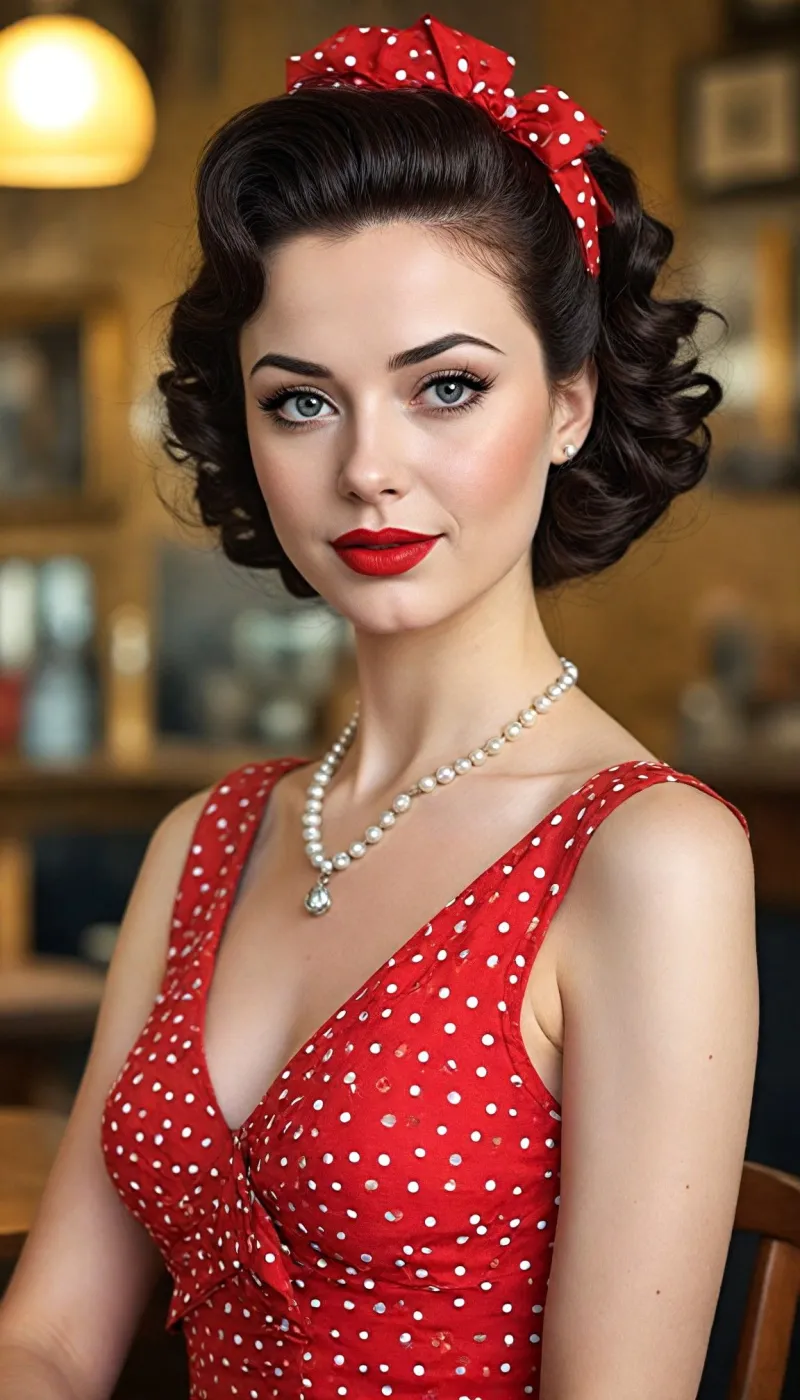
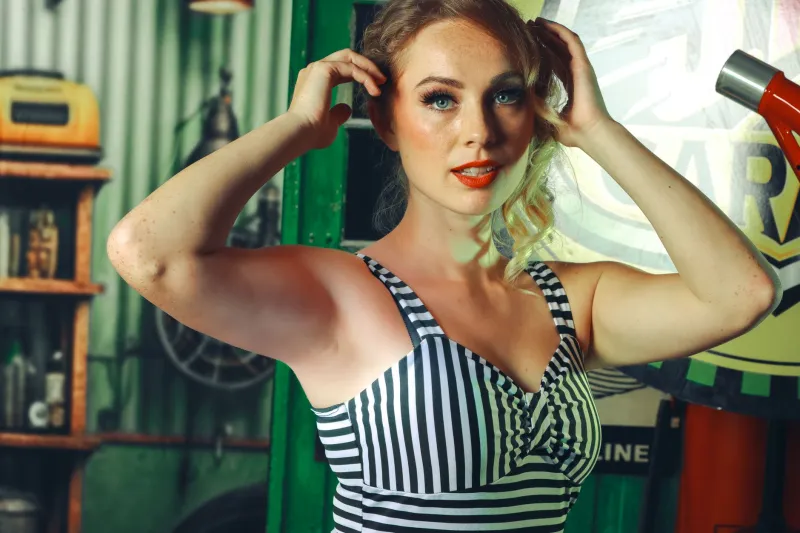
Three Generations, One Lens: When Mothers and Daughters Get Glamorous Together
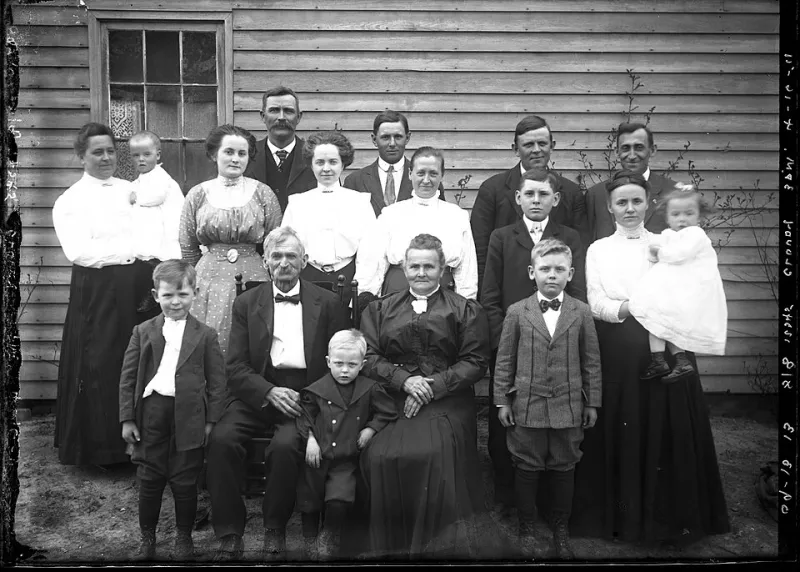
Photo: Warner, Marion G., 1861-1922, Public domain, via Wikimedia Commons
The booking request came in like any other: a mother and daughter, split-shoot, Saturday afternoon. Then photographer Ellen Marsh read the rest of the email. "Make it three," it said. "My mother's coming too. She's 68 and she's been practicing her poses in the mirror for a month."
Marsh, who runs a vintage-style studio outside Kansas City, has shot multi-generational families a dozen times now. "It started as a one-off," she says. "Now it's a thing women specifically ask for. Granddaughter books the shoot, then brings her mom. Then mom calls her sister. It spreads like a really glamorous rumor."
The Body Talk Nobody Planned
Here's what Marsh didn't expect: what women say to each other in her studio dressing room.
"In sixty years of family dinners, these women have apparently never once talked honestly about their bodies," she says. "Then grandma comes out of the fitting room in a wiggle dress and the granddaughter says, 'You have waist?' And suddenly they're having the conversation."
Diane Holt, 62, shot pin-up alongside her daughter and 24-year-old niece last spring. "My daughter grew up on magazine covers and Instagram, and I grew up on my mother's old Photoplay issues. I assumed we saw beauty completely differently," Diane says. "Turns out we were both just waiting for permission. The permission just arrived in different packaging."
Her niece, Katie, puts it more bluntly: "I've watched Grandma Diane apologize for her arms my entire life. Then she put on red lipstick and a pencil skirt and owned the room. I cried. I actually cried at a photo shoot."
Why a 1940s Style Works Across Eighty Years
There's a structural reason pin-up bridges generations better than, say, contemporary fashion photography: it doesn't ask anyone to look twenty-five.
Modern beauty imagery is built on youth as the default. Pin-up, by contrast, is built on styling — the hair, the silhouette, the posture, the attitude. Those are skills, and skills don't expire at 30. A 65-year-old woman with a victory roll and a confident hip-pop is executing the same visual language as a 22-year-old. Nobody's out of date.
"The era's aesthetic was actually generous," explains Marsh. "Marilyn Monroe had a soft belly. Bettie Page had thighs. The genre celebrated curves and presence, not flatness. When today's twenty-somethings discover that, there's this relief — like finding out the past was kinder than they thought."
The Grandmother Effect
The most powerful dynamic, according to nearly everyone we spoke with, flows from the oldest woman in the room.
"When Grandma picks the boldest outfit, it gives everyone else permission," Marsh says. "The 30-year-old thinks, if she can do it, I certainly can. Age becomes the courage, not the excuse."
Diane's mother, Evelyn, 84, hasn't done a shoot herself — "she says she's saving it for her ninetieth" — but she critiqued every single pose from a folding chair on set. "She'd seen all the original films in theaters," Diane laughs. "She was our art director. Told Katie her wrist was wrong. She was right."
More Than a Photo Day
What these shoots produce, in the end, isn't just framed prints for Mother's Day — though there are plenty of those. It's a shared vocabulary. Women who spent decades avoiding the subject of their own bodies suddenly have a common reference point: the laugh when the pose fell over, the grandmother's pose notes, the moment everyone saw the preview screen and went quiet.
Katie framed one image from that day — three women, three decades apart, all mid-laugh in vintage red. "People ask what the occasion was," she says. "I tell them: we finally stopped waiting to feel beautiful and just did it. Together."
The pin-up was born as an image to look at. Eighty years later, it's become something better — a reason for women to look at each other, and finally, at themselves, with the same generous eyes.