Forget the Rulebook: Why Modern Pin-Up Is Better When You Stop Chasing Period Perfection
Let's get something out of the way right up front: nobody is handing out certificates for historical accuracy in pin-up modeling. There's no governing body, no official registry, no panel of judges deciding whether your 1952-adjacent victory rolls are authentic enough to count. And yet, if you've spent any time in pin-up communities — online or in person — you've almost certainly run into the gatekeepers. The people who will, without being asked, inform you that your petticoat silhouette is more early '60s than late '40s, or that true pin-up wouldn't include that particular fabric print.
Here's the thing: they're not entirely wrong about the history. They're just completely wrong about what matters.
The Myth That "Real" Pin-Up Has a Single Look
The original pin-up era wasn't even a monolith. From the soft, wholesome illustrations of Alberto Vargas to the cheekier, more overtly playful work of Gil Elvgren, from wartime nose art to the glossy magazine spreads of the postwar boom — pin-up as a visual language was always in conversation with its moment. It shifted by decade, by region, by medium, and by audience. The 1940s pin-up looked different from the 1950s version, which looked different again from what emerged in the early '60s before the whole aesthetic got swallowed up by a changing cultural tide.
So when someone insists there's one correct way to do pin-up, they're already working from a flawed premise. The original artists and models were responding to their own present. They weren't recreating a past. They were making something alive.
The most honest thing a modern creator can do is exactly the same.
What "Vintage-Inspired" Actually Means in Practice
The phrase gets thrown around a lot, sometimes as a genuine descriptor and sometimes as a kind of apology — a way of saying "I know this isn't perfectly accurate, please don't come for me." But vintage-inspired, taken seriously, is actually a more sophisticated and creatively demanding approach than strict reproduction.
When you're working from inspiration rather than imitation, you're making choices. You're asking yourself what elements of a particular era actually resonate with you personally — the silhouette, the color palette, the attitude, the sense of playful confidence — and then figuring out how to bring those elements into contact with who you actually are right now, in 2025, with your body and your personality and your aesthetic sensibility.
That's real creative work. It requires more thought, not less.
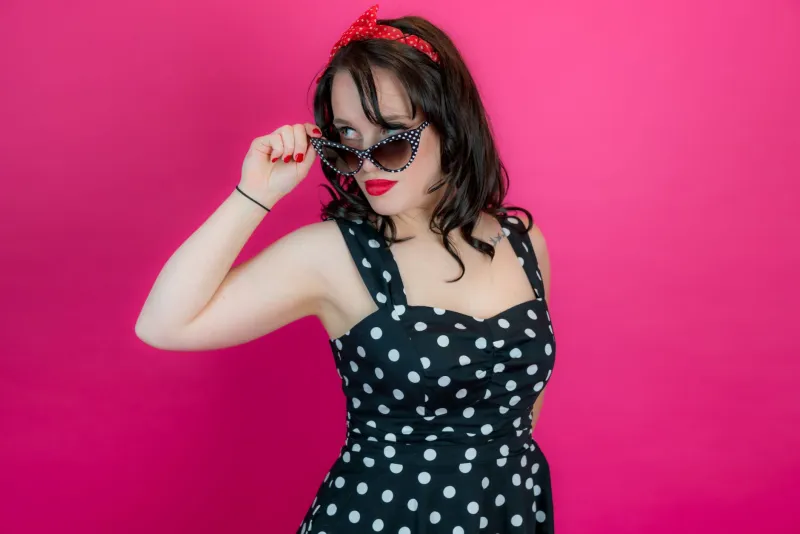
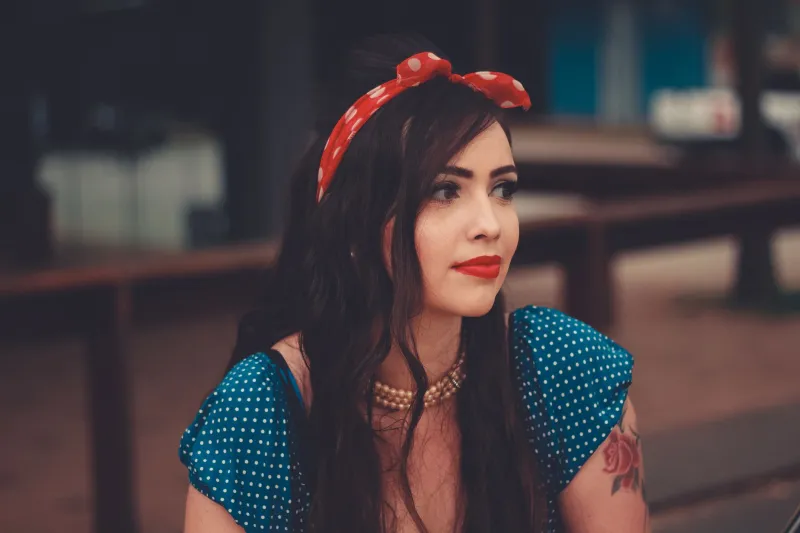
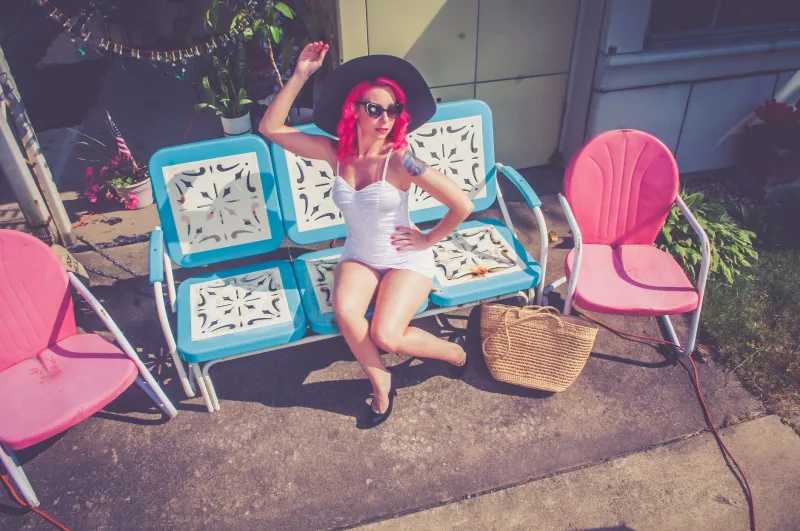
Some of the most striking pin-up imagery being produced today sits in deliberate conversation between eras. A '50s circle skirt paired with modern platform heels. Victory rolls meeting a contemporary graphic lip color that wouldn't have existed in 1948. Rockabilly energy filtered through a thoroughly Gen Z irreverence. These combinations aren't mistakes. They're statements.
The Gatekeeping Problem — and Why It's Particularly Exhausting for Women
It's worth naming something directly: the loudest policing of pin-up aesthetics tends to fall hardest on women, and particularly on women whose bodies, skin tones, or cultural backgrounds weren't centered in the original mid-century American pin-up tradition.
The vintage pin-up canon, as beautiful as much of it is, was also pretty narrow. It reflected specific beauty standards of a specific time and place that weren't exactly known for their inclusivity. When contemporary creators expand that frame — when they bring in a wider range of body types, skin tones, cultural references, and personal histories — that's not a corruption of pin-up. That's pin-up finally becoming what it always had the potential to be.
The gatekeeping that insists otherwise isn't protecting a tradition. It's protecting a limitation.
When Blending Eras Creates Something More Honest
There's a particular kind of inauthenticity that comes from trying too hard to be authentic. When every element of a shoot is locked down to a specific year, when the styling is so precisely researched that it functions more like a museum exhibit than a living image, something tends to get lost. The model herself can disappear inside the recreation.
The pin-up aesthetic at its best has always been about presence. About a woman who knows exactly who she is and is completely comfortable letting you see it. That quality — call it charisma, call it confidence, call it genuine self-possession — doesn't come from getting the seam placement right. It comes from feeling genuinely connected to what you're doing.
For a lot of modern models and photographers, that connection happens most naturally when the look is a mix. When it draws from the past but doesn't erase the present. When the woman in the frame is clearly a contemporary person who loves something about a particular era, rather than someone trying to pretend the last seventy years didn't happen.
That tension — between then and now — is actually where a lot of the most interesting visual energy lives.
Treating the Past as a Conversation Partner, Not a Boss
The healthiest relationship with vintage aesthetics is probably the one that treats history the way a good writer treats influences: respectfully, curiously, and without being enslaved to them. You can love the '40s silhouette without feeling obligated to reproduce every detail of it. You can be genuinely fascinated by postwar glamour without pretending you live there.
The original pin-up artists were drawing on their influences too — illustration traditions, advertising conventions, the movie stars of their moment. They were synthesizing. They were making something new from available materials. Doing the same thing now, with a different set of available materials and a different cultural moment, isn't a betrayal of that tradition. It's a continuation of it.
What This Means for Your Own Work
If you're a model building a pin-up practice, or a photographer developing a visual language around this aesthetic, the practical takeaway is pretty simple: stop asking whether something is accurate and start asking whether it's true.
True to you. True to the image you're trying to make. True to the feeling you want to create.
A look that's historically imprecise but feels completely alive and genuinely expressive will always outperform a look that's meticulously researched but leaves the actual person in the frame feeling like a costume rather than a collaborator.
The vintage details — the silhouettes, the color stories, the styling cues — are tools. Incredible tools, genuinely. But tools exist to serve the work, not the other way around.
Pin-up at its best has always been about a certain kind of freedom. The freedom to be seen, to be bold, to take up space with pleasure and confidence. Letting rigid period-accuracy rules shrink that freedom down is just about the least pin-up thing you could possibly do.
So wear the anachronistic shoes. Mix the decades. Make it yours. The rulebook was always optional.