Your Body, Your Frame: How Pin-Up Photography Became the Boldest Statement of Self-Ownership in 2024
Let's be honest about something. The internet was supposed to democratize beauty. Give everyone a platform. Let every body type, every skin tone, every version of gorgeous have its moment. And in some ways, it delivered. But somewhere between the rise of TikTok filters, Instagram's shadow-banning of curves, and AI-generated "ideal" faces flooding your feed, the whole thing quietly flipped. Instead of freedom, a lot of women ended up in a more sophisticated cage — one built out of engagement metrics and content moderation policies dressed up to look like community guidelines.
That's part of why pin-up photography is having such a genuinely interesting cultural moment right now. Not just as nostalgia. Not just as aesthetic. But as a philosophy.
The Algorithm Doesn't Get a Vote
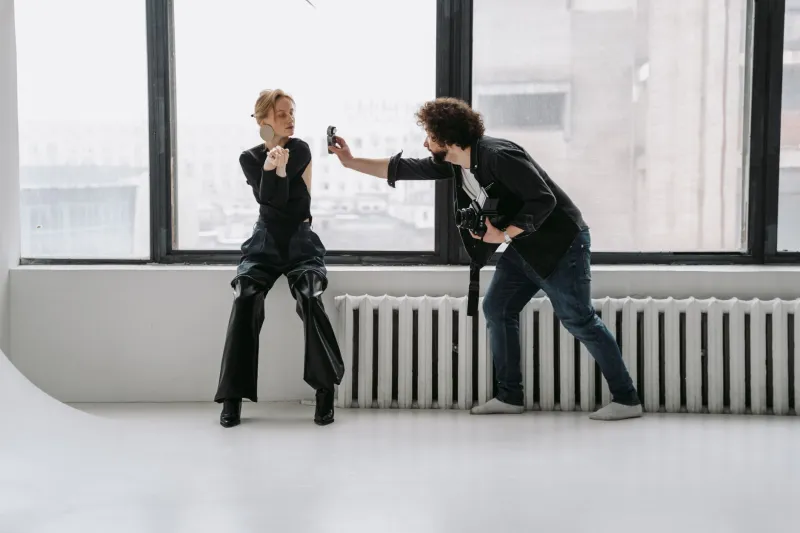
When a model steps into a pin-up shoot, she's making a series of very deliberate choices. The era she wants to channel. The silhouette she wants to wear. The mood she wants to project. The photographer she trusts to capture it. None of those decisions are made by a recommendation engine trying to maximize watch time. None of them are filtered through a platform's idea of what's "appropriate" or "brand-safe."
That's a bigger deal than it sounds. We've spent the better part of a decade handing our self-presentation over to systems that have their own agendas — advertisers to please, engagement loops to maintain, moderation teams with inconsistent standards. Pin-up, at its core, doesn't work that way. The image belongs to the person in it. The creative vision belongs to the people in the room. That's a kind of autonomy that's gotten genuinely rare.
Nashville-based photographer and longtime pin-up collaborator Dex Calloway puts it plainly: "Every model I work with comes in with a vision. They know what they want to feel like in the photos. My job is to help them get there, not to tell them what's marketable or what the algorithm rewards. That's refreshing in a way that I don't think people outside this world fully appreciate."
Vintage Roots, Very Modern Stakes
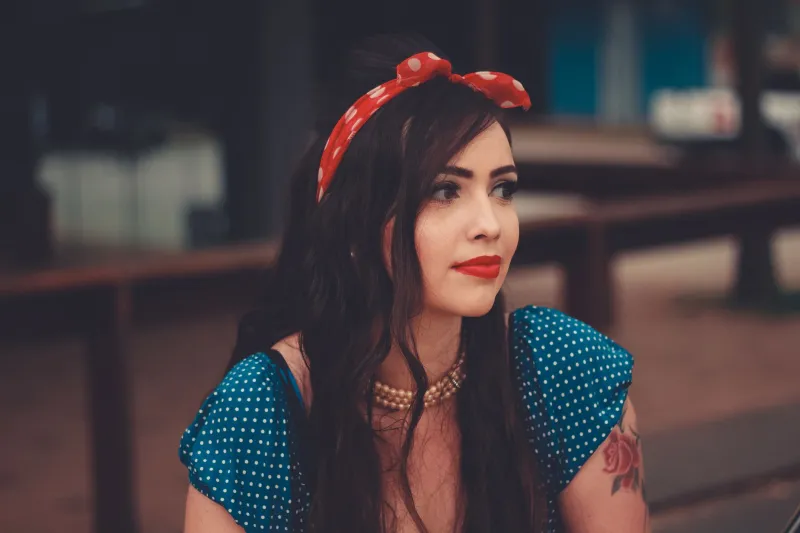
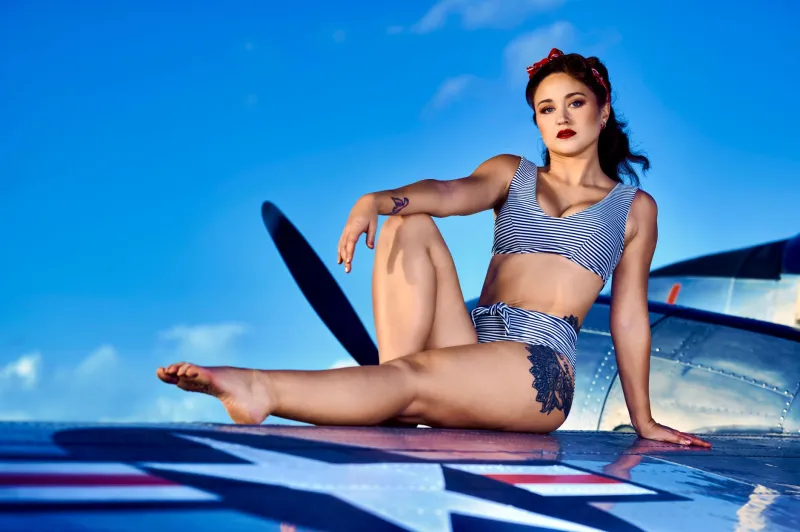
Pin-up has always carried a thread of defiance in its DNA. The classic pin-up images of the 1940s and 50s weren't just cheesecake. They were women — often working-class women, women outside the narrow lanes of high fashion — asserting that their bodies were worth celebrating. Worth looking at. Worth preserving in image.
The cultural critics who study this stuff will tell you that the pin-up tradition has never been purely about titillation. It's always been partly about visibility on your own terms. About saying: I exist, I'm here, and I look exactly how I want to look right now.
In 2024, that message hits differently. We're living through a moment where surveillance capitalism has made the human body — particularly the female body — into a data point. Your appearance, your behavior, your preferences are constantly being harvested, categorized, and monetized without your meaningful consent. Choosing to participate in something as intentional and image-conscious as a pin-up shoot is, in a very real sense, a refusal to be passive about how your likeness moves through the world.
The Difference Between Being Seen and Being Watched
There's a distinction that comes up again and again when you talk to women who've done pin-up work seriously. Being watched — the kind of ambient surveillance that defines modern digital life — feels involuntary. It happens to you. Being seen — genuinely, artfully, on your own terms — is something you choose.
Chicago model and pin-up enthusiast Ramona Vega, who's been shooting in the genre for about four years, describes it this way: "When I'm in a shoot, I'm the one deciding what story gets told. I'm not performing for some invisible audience I'll never meet. I'm collaborating with a photographer I chose, wearing clothes I picked, in a style that I connected to. The result is a picture that actually represents me. That's not something Instagram gives you."
This is the philosophical core of what makes pin-up feel so different from the passive beauty consumption that dominates most of our media diet. It asks you to be an active participant in your own representation. Not a consumer of someone else's idea of what's attractive, but a creator of your own visual identity.
Body Autonomy Isn't Just a Political Phrase
The term "body autonomy" gets thrown around a lot in political contexts — and rightfully so. But it applies just as meaningfully to the everyday, granular decisions we make about how our bodies are presented, photographed, and shared.
Choosing a pin-up aesthetic means deciding, specifically and deliberately, that your body is worthy of a certain kind of attention. That the curves, the angles, the personality you bring to a frame deserve to be lit well, composed thoughtfully, and treated with genuine artistic care. That's not a small thing. For a lot of women — especially those who've spent years being told by fashion media, social platforms, and well-meaning relatives that their bodies need to be smaller or different or somehow fixed before they're photograph-worthy — that decision is genuinely transformative.
The pin-up tradition, almost uniquely among popular photographic genres, has historically made room for a wide range of body types. The iconic images we think of aren't all one shape. They're not all one age. What they share is attitude, intention, and a kind of unapologetic presence. That's the part worth inheriting.
Reclaiming the Image
There's a practical dimension to all this worth mentioning. Pin-up photography, done right, produces images that you own. Images created in a real collaboration between you and a photographer, with real artistic intention behind them. Not screenshots. Not content captured by someone else's platform for someone else's purposes. Actual photographs that reflect an actual creative vision.
In an era where your face can be scraped by AI training datasets without your knowledge, where your selfies are filtered and analyzed before you even see them, where the terms of service you clicked through without reading have more to say about your image than you do — having photographs that are genuinely yours feels like a small but meaningful act of resistance.
Cultural commentator and body image researcher Dr. Lena Marsh, who's written about the intersection of vintage aesthetics and contemporary feminism, frames it succinctly: "What pin-up offers is a structured space for intentional self-presentation. In a media environment that's increasingly automated and extractive, that kind of intentionality is almost countercultural."
The Rebel Wears Red Lipstick
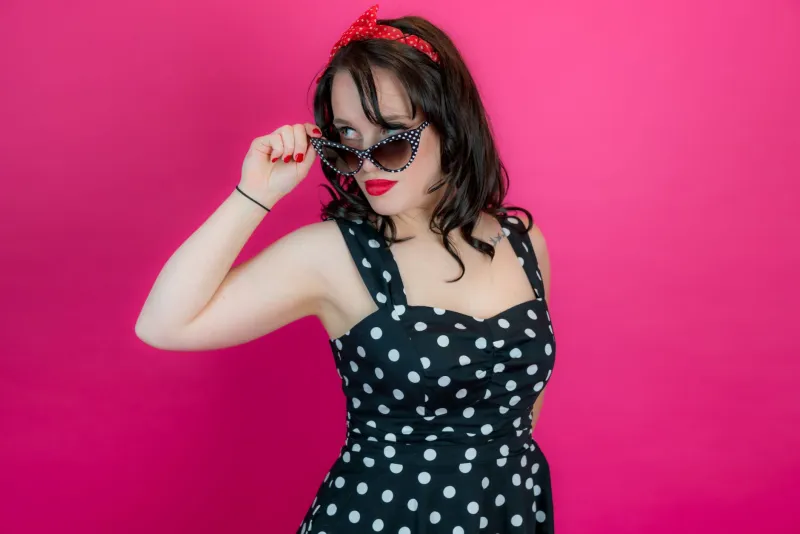
None of this means pin-up photography is a political manifesto or that everyone who picks up a victory roll hairstyle is making a grand statement. Most people come to it because it's fun. Because the clothes are gorgeous. Because there's something genuinely joyful about inhabiting an era's aesthetic for a few hours.
But the fun and the politics aren't separate. The joy of the thing is part of what makes it powerful. When you feel good in the frame — when you've made every choice about how you look and what you're projecting — that feeling is the autonomy. That's the point.
In 2024, choosing to be the author of your own image rather than a subject of someone else's algorithm is, quietly and without any fuss, one of the more radical things you can do. Pin-up just happens to make it look incredible while you're doing it.