Nostalgia Is Not a Costume: The Real Secret Behind Pin-Up Photography That Lasts
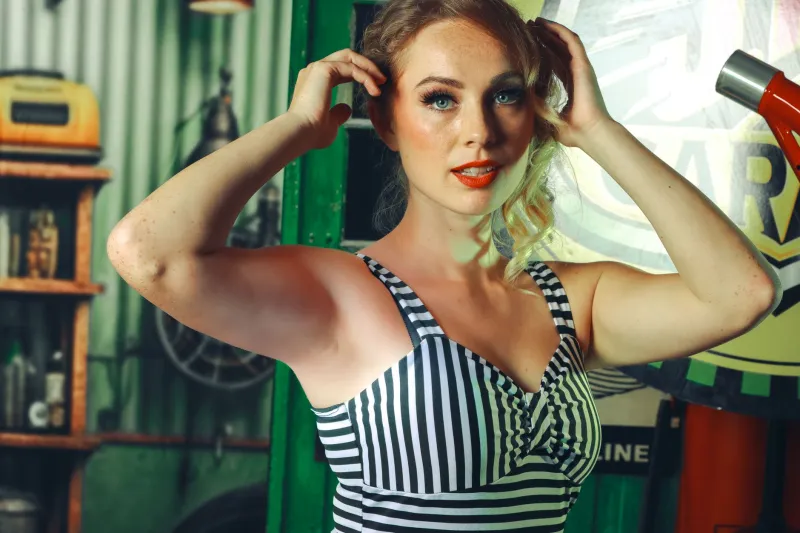
There's a particular kind of pin-up photo that looks absolutely flawless on paper. The victory rolls are tight and symmetrical. The seams on the stockings run arrow-straight. The props are period-correct down to the last detail. The color palette could've been lifted straight from a 1947 calendar illustration. And yet — somehow — it feels completely hollow.
You've seen it. Maybe you've even shot it. Everything checks out historically, and nothing checks out emotionally.
This is the vintage myth in action: the idea that if you just nail the era hard enough, the magic will follow automatically. Spoiler — it won't. And understanding why is probably the most useful thing any aspiring pin-up model or photographer can wrap their head around.
What the Archives Actually Tell Us
Here's something worth sitting with: the original pin-up artists weren't archivists. Gil Elvgren wasn't painting historically accurate women. He was painting idealized women filtered through his own creative instincts, his era's beauty standards, and — crucially — the specific personalities of the models sitting in front of him. Alberto Vargas did the same. So did Earl Moran.
These images became iconic not because they were documentary records of mid-century American life, but because they captured something electric about femininity, playfulness, and allure that transcended their specific moment. The nostalgia we feel looking at them now is almost a happy accident. At the time, they were simply contemporary.
So when modern pin-up enthusiasts treat those images as blueprints to replicate down to the last hairpin, they're actually missing the entire point of what made the originals work.
The Authenticity Gap Nobody Talks About
When a model is spending 90% of her mental energy worrying about whether her bullet bra is the right decade or whether her lipstick shade matches a specific Technicolor reference, something important gets crowded out: her.
And here's the thing — the camera always knows. Viewers always feel it, even if they can't articulate it. There's a flatness to pin-up photography that prioritizes historical correctness over genuine personality. The model becomes a prop in her own shoot.
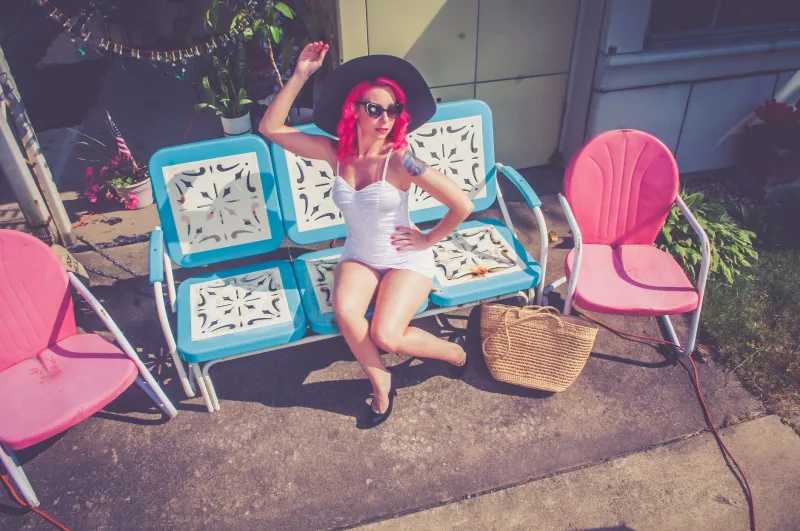
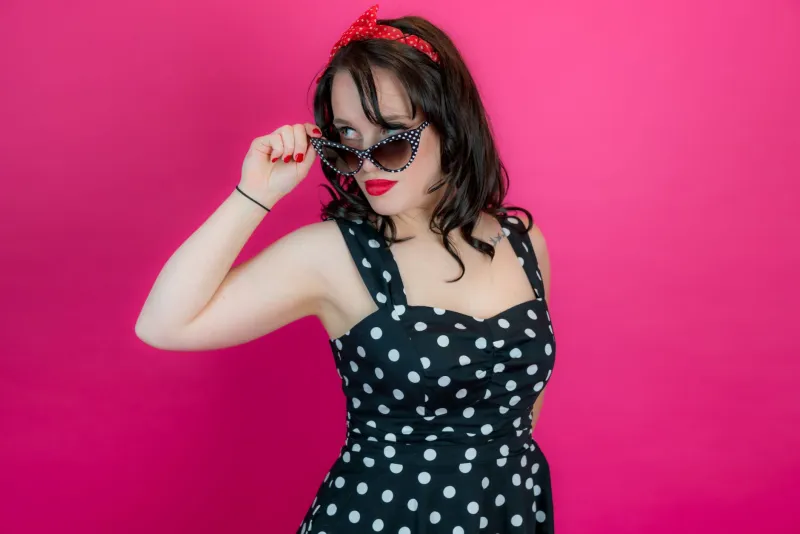
Contrast that with the images that genuinely stop people mid-scroll. Nine times out of ten, those photos have a woman who looks like she's actually inhabiting the aesthetic rather than performing it. Maybe her hair isn't textbook 1955. Maybe her tattoos are visible. Maybe there's something in her expression that reads as unmistakably 2024. And somehow, all of that makes the vintage elements land harder, not softer.
Authenticity isn't the enemy of nostalgia. It's actually what makes nostalgia feel real.
Blending Eras Is a Feature, Not a Bug
Some of the most compelling pin-up work happening right now is deliberately anachronistic. A model might pair a classic bullet silhouette with a pair of modern platform heels. A photographer might use vintage-inspired lighting but shoot on a rooftop in downtown Chicago. The color grading might nod to old film stock while the model's energy reads as completely contemporary.
This isn't laziness or ignorance of history. It's actually a more sophisticated approach to the aesthetic — one that treats vintage as a language rather than a law.
When you treat pin-up history as a vocabulary to draw from, you get to build something new with it. You can keep the red lips and the knowing smile and the playful confidence, and then layer your own personality, your own body, your own story right on top. The result is something that honors the tradition without being trapped by it.
That's the difference between a living art form and a reenactment.
Why "Timeless" Has Nothing to Do With a Calendar
People throw the word "timeless" around a lot in pin-up circles, usually to describe images that look like they could've been shot in 1952. But that's not actually what timeless means.
Timeless means the image keeps working. It keeps resonating. It keeps pulling people in regardless of when they encounter it. And that quality has almost nothing to do with period accuracy. It has everything to do with emotional truth.
A woman who looks genuinely powerful in front of a camera — who's clearly having fun, who's comfortable in her body, who's bringing something real to the frame — creates an image that will still hit in twenty years. A technically perfect recreation of a 1940s pin-up scene, shot without that emotional core, will start to look like a history project within a decade.
The classics we keep returning to? They had both. The trick is understanding which ingredient is actually doing the heavy lifting.
Finding Your Own Version of the Aesthetic
None of this means you should throw out your vintage reference books or stop caring about era-appropriate styling. Historical research is genuinely valuable — it gives you a rich toolkit of silhouettes, color stories, poses, and attitudes to play with. Knowing your Elvgren from your Petty is useful context.
But that knowledge should serve your vision, not replace it.
Before your next shoot, try this: instead of asking "what does a 1950s pin-up look like?" ask "what does my version of this aesthetic look like?" What elements genuinely excite you? What details feel like you versus what details feel like you're checking a box? Where does the vintage inspiration make you feel more yourself, and where does it make you feel like you're in a costume?
The answers to those questions will point you toward images that actually last.
The Bottom Line
Pin-up photography has survived and thrived for decades not because people kept recreating the same images, but because each generation brought something new to the conversation. The aesthetic is flexible enough to absorb contemporary personalities, modern bodies, current cultural moments — and it only gets richer for it.
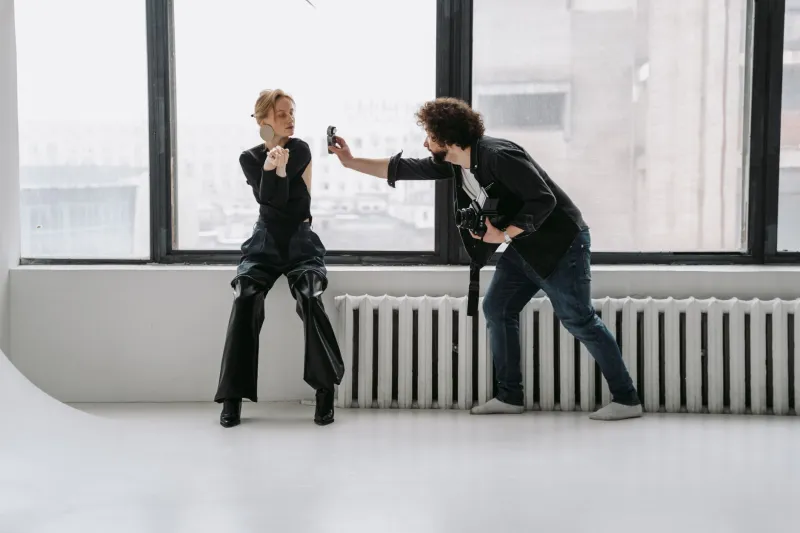
The vintage myth tells you that getting the history right is the whole game. The reality is that getting yourself right is what makes the history matter. Strip away the period-perfect props and the meticulous costuming, and what you're left with is a woman, a camera, and whatever passes between them.
That's always been the secret. It just looks better in seamed stockings.