More Than a Pretty Pose: The Unexpected Ways Pin-Up Modeling Changes How Women See Themselves
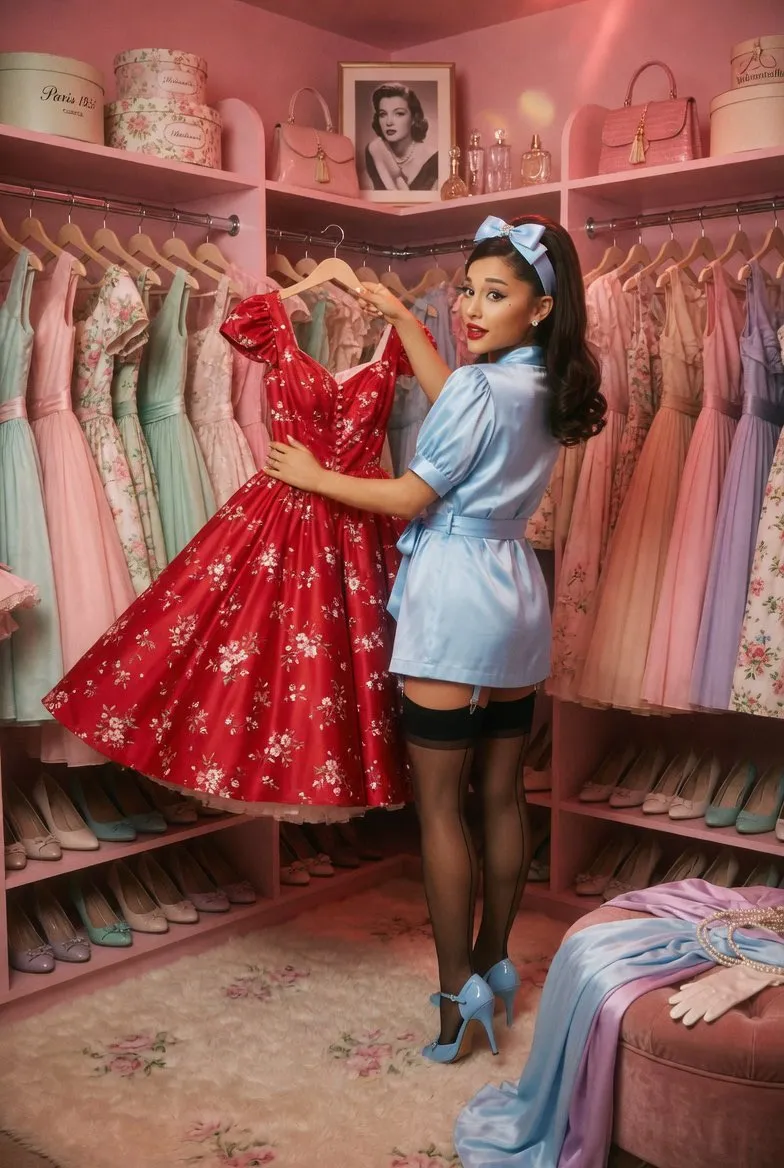
Ask most women what they picture when they hear "pin-up modeling," and they'll probably describe something external — the victory rolls, the red lip, the coy over-the-shoulder glance. What they're less likely to describe is what's happening internally: the nerves before the shoot, the weird emotional release that sometimes happens mid-session, or the quiet but seismic shift in self-perception that follows.
But talk to women who've actually done it, and that interior story is usually the one they most want to tell.
"I Didn't Expect to Cry"
Marcella, a 38-year-old teacher from Nashville who did her first pin-up shoot two years ago, remembers standing in front of the photographer's backdrop in a vintage swimsuit and feeling suddenly, overwhelmingly emotional. "I'd spent twenty years hiding my body," she says. "And then this photographer is telling me I'm gorgeous and asking me to lean into the camera, and something just broke open. In a good way."
Her experience isn't unusual. Among the models and enthusiasts we spoke with for this piece, a recurring theme emerged: the shoot itself becomes a kind of reckoning. For many women, particularly those who grew up absorbing messages about which bodies are acceptable and which aren't, the act of being deliberately, intentionally seen — and celebrated — hits differently than they expected.
"I thought it would feel performative," says Diane, a 45-year-old from Chicago who shoots regularly for a regional pin-up publication. "Like I was playing dress-up. Instead it felt like I was finally showing up as myself for the first time."
The Psychology of Being Seen
There's actually some interesting psychology at work in what these women are describing. Research on body image consistently shows that how we feel about our bodies is deeply tied to how we believe others perceive us — but also to how much agency we have over our own presentation. Pin-up photography, at its best, hands that agency back to the subject.
The genre has a built-in framework of appreciation. Unlike fashion photography, which often treats the model as a blank canvas for the clothes, pin-up photography is fundamentally about the woman herself — her personality, her playfulness, her specific physical presence. The aesthetic celebrates curves, softness, and a kind of knowing confidence that doesn't require perfection. And for women who have spent years receiving the opposite message from mainstream media, stepping into that framework can feel genuinely corrective.
"I'd never thought of my body as something worth celebrating," says Keisha, a 29-year-old from Atlanta who discovered pin-up culture through a friend's shoot. "I always thought I needed to lose weight first, tone up first, fix something first. The pin-up world was the first place that said 'no, actually, you right now, as you are.' That was a big deal."
Vulnerability as a Starting Point, Not a Weakness
Not every woman walks into her first shoot feeling liberated. For many, the initial experience is dominated by anxiety — about being judged, about not knowing how to pose, about whether they're "pin-up enough" (whatever that means). Several models described their first sessions as genuinely uncomfortable, and were candid about the gap between what they imagined and what they felt.
"I hated the first thirty minutes," admits Priya, a 33-year-old model from Houston. "I was so in my head. I kept thinking about how I looked instead of just being there. My photographer was patient, and eventually something clicked — but it wasn't instant magic."
What those women also noted, almost universally, was that pushing through that discomfort produced something meaningful. The vulnerability of being photographed — really photographed, not just snapping a selfie — strips away a lot of the armor people carry. And what's underneath, it turns out, is often stronger than expected.
"You find out you can handle being seen," Priya says. "And that sounds small, but it's not. It changes how you walk into a room after."
Reclaiming Sexuality on Your Own Schedule
For a subset of the women we spoke with, pin-up modeling carries a more specific kind of weight: it's the first time they've engaged with their own sexuality on their own terms, in a context they control entirely.
This is particularly resonant for women who've had complicated relationships with their bodies due to illness, pregnancy, trauma, or simply the accumulated weight of cultural messaging about who gets to be considered sexy. The pin-up genre, with its emphasis on playfulness and self-possession rather than explicit content, provides a framework that feels approachable — even for women who wouldn't consider themselves comfortable with more overtly sexual contexts.
"I had a double mastectomy at 36," says Sandra, a 41-year-old from Phoenix. "I felt like my body had betrayed me and then been taken apart. Doing a pin-up shoot — with a prosthetic, in a gorgeous vintage bra, feeling genuinely beautiful — was the first time I felt whole again. I own those photos. Nobody can take that from me."
That sense of ownership — of having created something that belongs entirely to yourself — comes up again and again in these conversations. In a world where women's bodies are constantly being discussed, evaluated, and regulated by external parties, the act of deliberately crafting your own image carries a quiet but real power.
It Doesn't Fix Everything (And That's Okay)
It would be dishonest to frame pin-up modeling as some kind of universal cure for body image struggles. Several of the women we spoke with were careful to note that the confidence they found in front of the camera doesn't automatically translate to every corner of their lives.
"I still have bad days," Marcella says. "I still look in the mirror sometimes and don't love what I see. But I also have these photos that remind me of what I'm capable of feeling. That matters."
What the experience seems to offer isn't a permanent fix but a reference point — a lived memory of feeling powerful, beautiful, and fully yourself. And in an era when women are constantly navigating contradictory messages about their bodies, having that kind of concrete, personal evidence in your back pocket is worth more than it might sound.
The red lips and the victory rolls are part of the story. But the real pin-up magic? It happens somewhere between the first nervous breath and the moment you stop thinking about how you look and just start being there.