Dressed to Thrill: The Art of Building a Pin-Up Wardrobe That's Both Gorgeous and Wearable
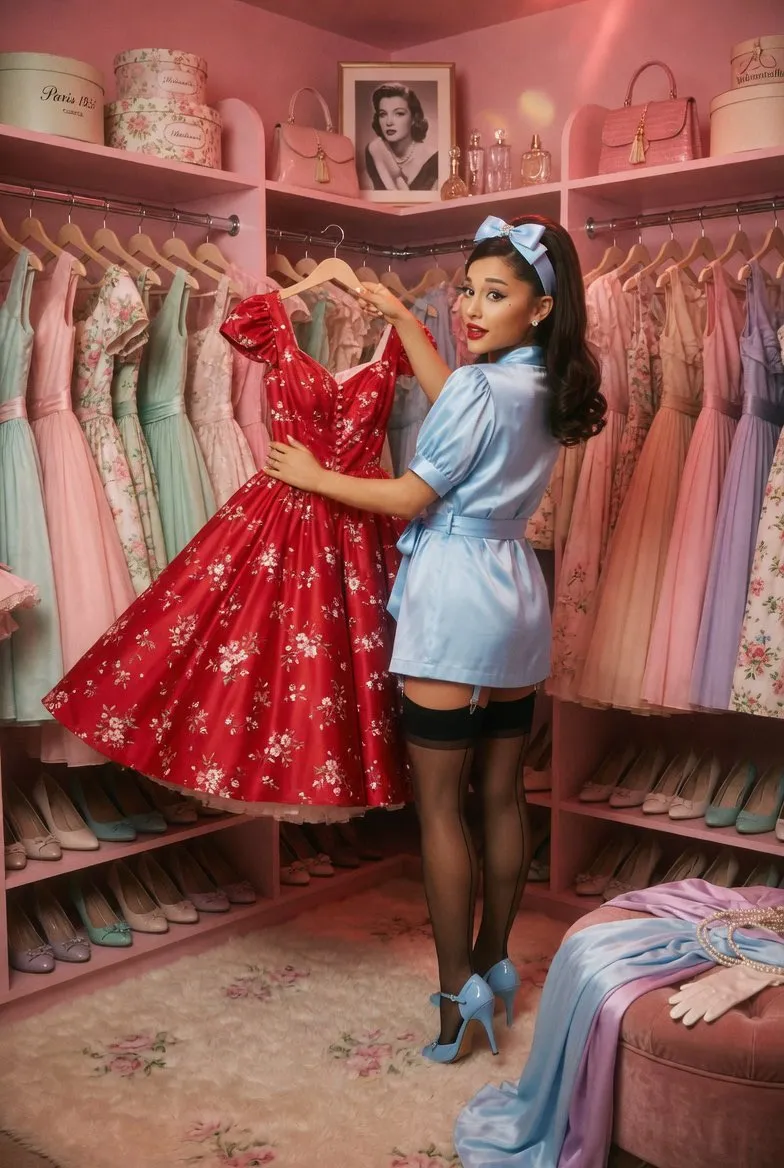
Photo: vintage 1950s pin-up fashion wardrobe styling retro dress fitting studio, via pbs.twimg.com
There's a fantasy version of pin-up styling — the kind you see in finished photographs, where every seam sits perfectly, every pleat falls just right, and the whole thing looks like it was assembled by someone with an encyclopedic knowledge of mid-century fashion. Then there's the reality: stiff boning, scratchy fabrics, sizing systems that bear no relationship to modern bodies, and the constant negotiation between "this looks incredible" and "I can't actually breathe in this."
The best stylists in the pin-up world have figured out how to live in that gap. And their approach is a lot more pragmatic — and a lot more interesting — than most fans of the aesthetic would guess.
The Myth of Pure Authenticity
Let's get something out of the way early: almost no working pin-up shoot is using fully authentic vintage garments from the 1940s or '50s. The ones that do are exceptions, and they come with a long list of complications.
"Genuine vintage pieces are fragile, they're sized for bodies that ate very differently than we do, and they don't survive a full shoot day the way modern reproductions do," says stylist Marlena Voss, who has dressed performers for editorial pin-up spreads and burlesque productions across the Midwest. "The goal isn't to be a museum exhibit. The goal is to evoke the era convincingly on camera."
That distinction — evocation versus replication — is the philosophical foundation that separates stylists who get consistently beautiful results from those who chase authenticity at the expense of everything else. A dress that reads as 1952 in a photograph is doing its job, regardless of whether it was actually sewn in 1952.
This doesn't mean anything goes. The details still matter enormously. Silhouette, fabric weight, color palette, construction — all of it contributes to whether a look lands or falls apart. But the path to getting there is more flexible than purists often acknowledge.
Where to Actually Find the Good Stuff
Sourcing pin-up wardrobe falls into a few distinct categories, each with its own advantages and tradeoffs.
Reproduction brands are the workhorses of professional styling. Companies like Collectif, Stop Staring, and Bernie Dexter produce clothing explicitly modeled on mid-century silhouettes but built with modern sizing, stretch fabrics, and construction that holds up to repeated wear. They're accessible, relatively affordable, and photograph beautifully. The tradeoff is that they lack the idiosyncratic details that make genuine vintage pieces special — but for most shoots, that's a reasonable exchange.
Genuine vintage is worth hunting for statement pieces: a perfectly preserved wiggle dress, a structured bullet bra, a pair of seamed stockings with the original packaging. Stylist and costume designer Ray Calloway, based in Dallas, treats vintage finds as accent pieces rather than full looks. "I'll build an outfit around one authentic piece and fill in the rest with quality reproductions. The real thing grounds the whole look without putting a $400 dress at risk of getting damaged under lights."
Etsy, estate sales, and regional vintage markets are the primary sourcing channels for authentic pieces. eBay still has a solid inventory but requires patience and a good eye for condition issues that photos don't always reveal.
Custom and bespoke is the highest-end option and increasingly accessible as the pin-up community has grown. A number of independent seamstresses specialize in historically informed pin-up construction — they'll build to your model's measurements, use period-appropriate techniques where practical, and accommodate modern undergarments. The cost is higher, but the fit is unmatched.
The Undergarment Question (It's More Important Than You Think)
Vintage silhouettes were engineered around vintage undergarments, and this is the piece of the puzzle that trips up newer stylists most consistently.
The high-waisted, nipped-in, full-hip shape that defines 1950s pin-up fashion doesn't happen by accident. It was created by specific foundation garments — girdles, longline bras, waist cinchers — that modern bodies don't typically wear. Getting the silhouette right means solving the undergarment equation first.
"The shape comes from the foundation, not the dress," Marlena says. "If you put a vintage-style wiggle dress on someone without the right understructure, it just looks like a tight dress. The moment you add a proper waist cincher and the right bra, the whole thing transforms."
Modern shapewear has actually made this easier than it used to be. High-waisted smoothing shorts, longline bras with underwire, and adjustable waist cinchers are all widely available and significantly more comfortable than their mid-century counterparts. Brands like What Katie Did and Rago have loyal followings in the pin-up community specifically because they bridge historical construction with wearable comfort.
For bust support, the bullet bra silhouette — the pointed, conical shape associated with '50s pin-up — requires either a period-correct bra or a modern reproduction. The shape doesn't happen with a regular underwire, no matter how well the dress fits.
Common Mistakes That Break the Illusion
Even experienced stylists have a list of recurring errors they watch for. A few of the most common:
Wrong decade mixing is subtle but reads on camera. The nipped waist and full skirt of the early '50s doesn't pair naturally with the sleeker, more body-conscious lines of late '50s fashion. Mixing them creates an anachronistic blur that dilutes the period feeling.
Modern shoes with vintage silhouettes is another frequent culprit. Contemporary heels — even ones marketed as "retro" — have proportions and construction that clash with genuine vintage or reproduction dressing. The heel height, toe shape, and strap placement all matter.
Ignoring scale is a mistake that's easy to miss until the photos come back. Accessories, prints, and patterns all need to be scaled appropriately for camera — small prints disappear, oversized accessories overwhelm, and fine jewelry that looks delicate in person simply vanishes on a sensor.
Fit that's too tight is the one Ray sees most often. "People assume pin-up means body-con, and it's actually the opposite. The clothes should skim and suggest, not grip. When something's too tight, it pulls at the seams and breaks the clean lines that make the silhouette work."
Comfort as a Creative Tool
Here's a perspective that doesn't get enough airtime in styling conversations: a model who's physically comfortable performs better. Full stop.
A corset laced so tight the model can't take a deep breath, shoes that cause visible pain after twenty minutes, or a waistband that digs in under studio heat — all of these produce photographs where the discomfort reads through. The body holds tension differently when it's uncomfortable, and cameras catch that.
"I always do a comfort check before we shoot," says Ray. "Can you sit down? Can you move your arms freely? Is anything pinching? If the answer to any of those is no, we're adjusting before we start."
The best pin-up wardrobe achieves something that looks effortless precisely because it was thoughtfully constructed to feel that way. The drama lives in the photograph. Behind the lens, the goal is always to make the performer feel confident and at ease — because that's what actually shows up in the final image.
Vintage glamour has always been about aspiration. The smartest stylists in the business understand that the most authentic thing you can do is make the dream look real — and that takes a whole lot of very practical thinking.