Why Pin-Up Gets It Right When High Fashion Gets It Wrong
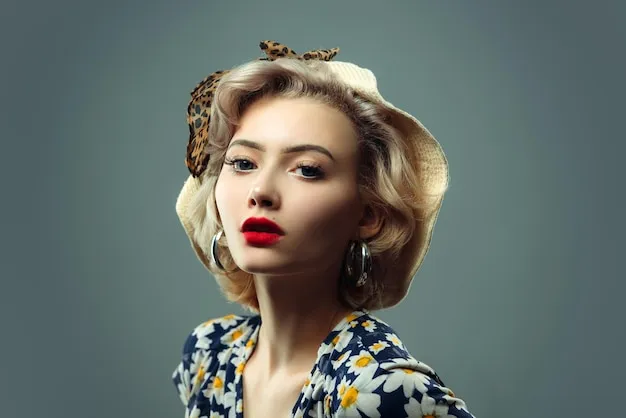
Photo: vintage pin-up photography studio woman confident retro glamour, via img.freepik.com
Here's a scenario that plays out constantly in studios across the country. A woman books a traditional fashion shoot — maybe for a brand campaign, maybe for her portfolio, maybe just because she wanted something professional. She spends hours getting ready. She shows up excited. And somewhere between the third outfit change and the fourteenth correction from the photographer, something deflates. She leaves with images that are technically fine and a feeling she can't quite name but definitely isn't confidence.
Now run the same scenario with a pin-up shoot. Same woman, same nerves, completely different outcome. She walks out with a stack of images and a look in her eye like she just remembered something important about herself.
This isn't a coincidence. And it's not just about the victory rolls and the red lipstick, though those don't hurt. There's something structurally different happening in pin-up photography — something that mainstream fashion shoots, for all their technical sophistication, consistently fail to replicate.
The Problem With "Aspirational"
High fashion photography is built on a specific premise: the image should represent something beyond the person in front of the camera. The model is a vehicle for an idea, a brand, a fantasy that belongs to someone else. That's not a criticism — it's literally the job description. But it creates a psychological environment that's quietly brutal for anyone who isn't a seasoned professional.
When the goal is to make you look like something you're not, every deviation from that vision becomes a problem to solve. Your posture needs correcting. Your angles need adjusting. The lighting needs to compensate for this or that. The cumulative message, even when delivered with total professionalism, is that the raw material — meaning you — requires significant intervention.
Pin-up flips that entirely. The genre's foundational premise is celebration, not transformation. The whole aesthetic was built around the idea that real women, with real bodies and real personalities, are inherently worth looking at. That's not a marketing line. It's baked into the visual language of the form itself.
"Fashion photography is always reaching toward something external," says one Los Angeles-based pin-up photographer who has shot both commercial and pin-up work for over a decade. "Pin-up reaches inward. We're trying to find what's already there and make it visible. That's a completely different relationship between the photographer and the subject."
Collaboration vs. Direction
Another structural difference is how power moves around on set.
In a traditional fashion shoot, the photographer and creative director hold most of the cards. The model executes. That's the hierarchy, and it exists for legitimate reasons — someone has to be responsible for the final image. But for women who aren't professional models, that hierarchy can feel alienating fast. You're there to be arranged, not to participate.
Pin-up shoots tend to operate differently. Experienced pin-up photographers consistently describe their process as collaborative — almost conversational. There's a back-and-forth about what feels right, what the subject wants to emphasize, what era or character resonates with her. The model isn't just executing poses; she's helping build the image.
That shift matters more than it sounds. When you have agency in the creative process, you're invested in the outcome rather than just subject to it. You stop waiting to be told whether you did it right and start caring about whether it feels right. That's a completely different psychological state to be photographed in, and it shows up in the images.
"I always tell women coming in for their first shoot that we're doing this together," says a Chicago-based photographer who specializes in 1950s and early '60s aesthetics. "I'm not here to take pictures of you. I'm here to make pictures with you. Once they actually believe that, everything changes. The tension drops out of their shoulders and something real starts happening."
Sensuality With a Purpose
There's also something worth examining in how pin-up handles sensuality compared to mainstream fashion.
High fashion imagery often uses sexualized elements in ways that feel disconnected from the person being photographed. The body becomes scenery. The expression is blank or distant because that reads as sophisticated. The effect can be striking, but it's rarely empowering for the person in the frame — they're not present in the image as themselves, they're present as a surface.
Pin-up's approach to sensuality is different because it's intentional and personalized. The genre invites women to decide how much they want to reveal, what kind of allure they want to project, and what version of themselves they want to bring forward. The sensuality in a good pin-up image belongs to the subject. It's not applied to her from the outside — it comes from her.
That distinction matters enormously to how women experience the shoot and the resulting images. When your sensuality is something you're expressing rather than something being extracted from you, the whole experience changes.
The Costume Effect
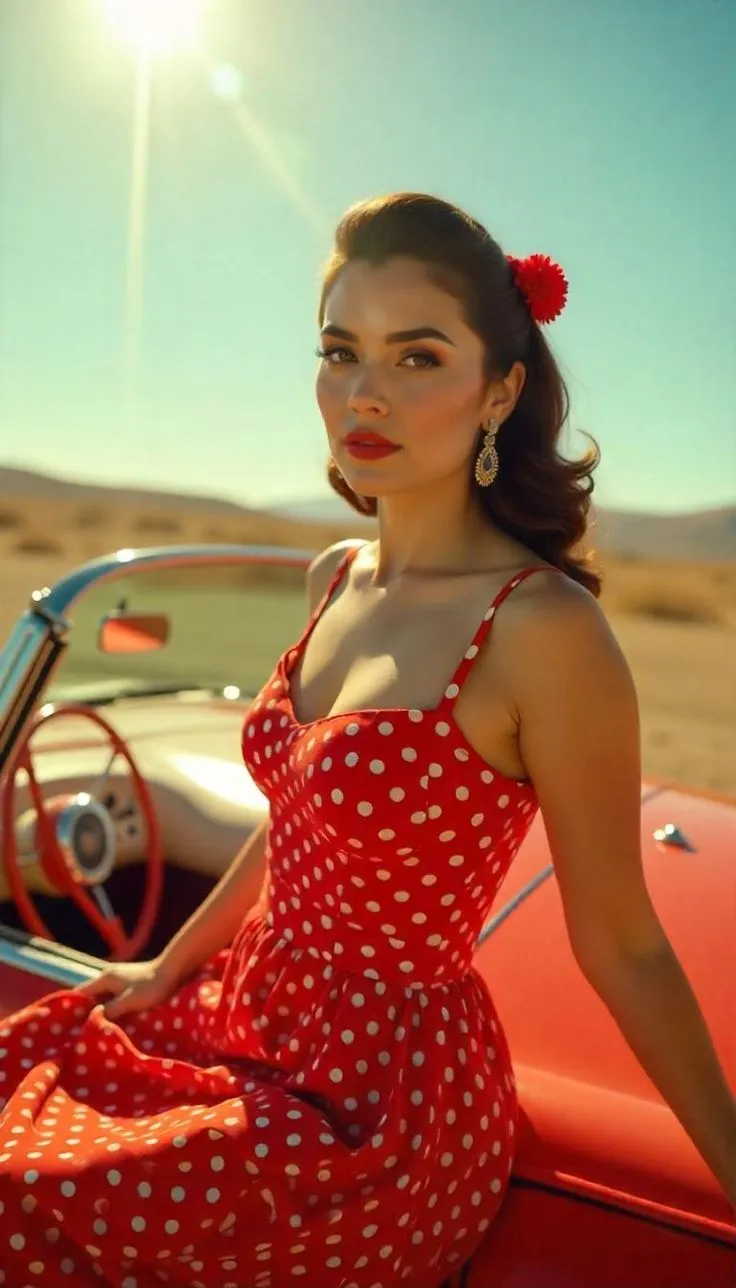
One factor that doesn't get enough credit is the role of pin-up's very specific aesthetic vocabulary — the bullet bras, the high-waisted shorts, the victory rolls, the cat-eye liner — in helping women access a version of themselves they don't usually get to inhabit.
Psychologists have written about what's sometimes called "enclothed cognition" — the idea that what we wear changes how we think and feel, not just how we look. Pin-up costuming is enclothed cognition on purpose. The whole point of the aesthetic is to put on a persona that is still fundamentally you, just amplified.
Women who've done pin-up shoots consistently describe the moment they're fully dressed and made up as a turning point in the experience. Something clicks. They're not playing dress-up exactly — it feels more like trying on a version of themselves that's always been there but doesn't usually get airtime.
"I've done regular headshots, I've done boudoir, I've done a bunch of different kinds of photography," says one woman who's done multiple pin-up shoots over the past few years. "Nothing else has ever made me feel the way pin-up does. It's like the costume gives you permission to take up space in a way you normally don't. And then the camera catches you doing it."
What Fashion Photography Could Learn
None of this means high fashion photography is doing something wrong, exactly. It's doing something different, with different goals, for a different audience. But there are lessons in the pin-up model that the broader industry could genuinely use.
The emphasis on collaboration over direction. The premise that the subject is the point, not the problem. The deliberate use of costume and persona to help people access their own confidence rather than perform someone else's. The understanding that sensuality is most powerful when it belongs to the person expressing it.
Pin-up has been around long enough to figure some things out. And what it's figured out — almost by accident, through decades of refinement — is how to make the person in front of the camera feel like the most important person in the room.
That's not a small thing. That's actually the whole thing.