Period Perfect: The Real Difference Between Vintage-Inspired and Vintage-Accurate Pin-Up Style
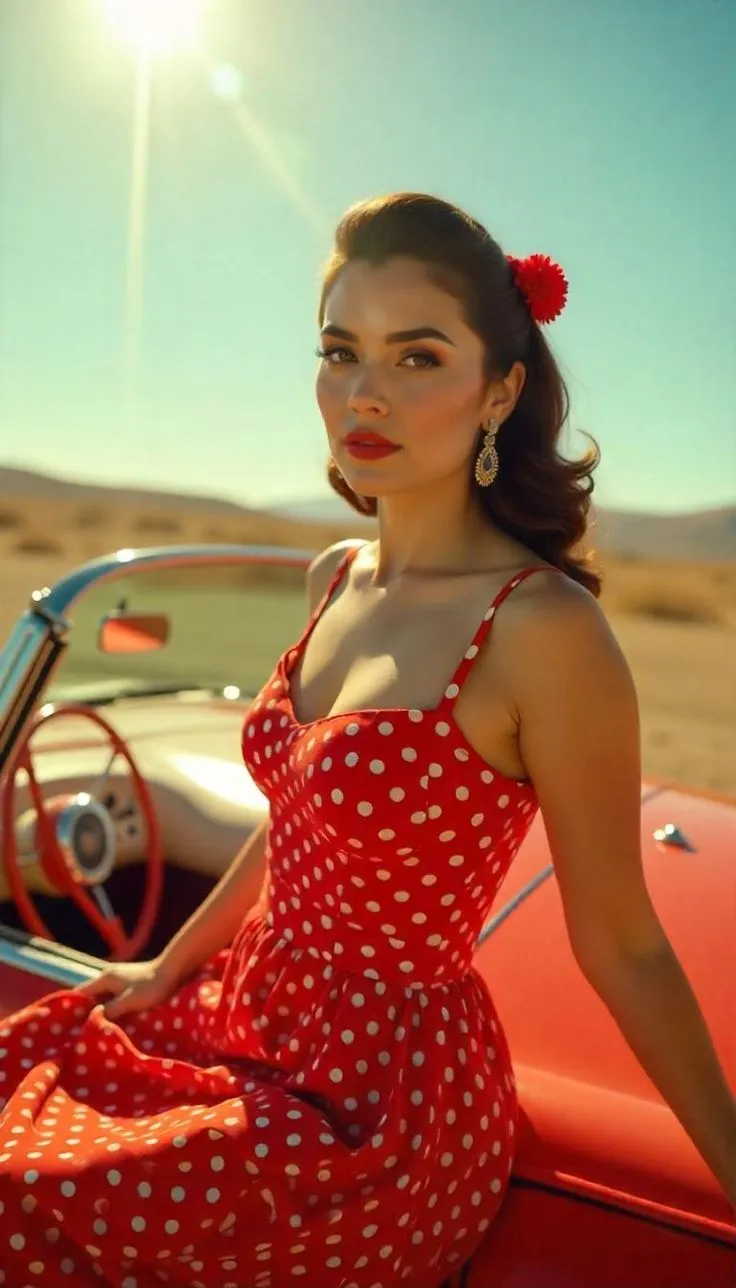
Photo: 1950s vintage pin-up style woman retro fashion photography studio, via i.pinimg.com
Let's be honest — not every vintage-styled shoot actually looks vintage. You've seen it: the too-bright polka dots, the slightly-off silhouette, the hairstyle that's more "Pinterest approximation" than actual 1952. It's not a crime, but if you're aiming for genuine period charm rather than dress-up vibes, there's a real craft to getting the details right.
The golden decades of pin-up — roughly 1940 through the late 1950s — weren't a monolith. They were two distinctly different aesthetic worlds, each shaped by their own cultural pressures, fabric availability, and ideas about what a woman's body should look like in front of a camera. Collapsing them into one vague "retro" blur is where a lot of shoots go sideways.
The 1940s: Utility, Warmth, and a Whole Lot of Leg
The wartime 1940s pin-up wasn't glamour for glamour's sake. It was morale. Artists like Alberto Vargas and Gil Elvgren were painting women who felt real — warm, playful, a little mischievous. The women in those images wore clothes that reflected wartime rationing: shorter hemlines (fabric was scarce), simpler cuts, and a surprising amount of high-waisted shorts and one-piece swimsuits.
If you're shooting a 1940s-inspired set, the silhouette matters enormously. Shoulders were broader, waists were defined but not cinched to extremes, and the overall line was more athletic than the hourglass we associate with the decade that followed. Hair was often softer — victory rolls, yes, but also loose waves, snoods, and updos that had a practical edge. Think less "pinned within an inch of its life" and more "just got off a factory shift and still looks incredible."
Colors in 1940s pin-up art tended toward warm, sun-drenched palettes. Photographically, if you're going for period accuracy, muted tones and softer lighting setups echo the printed illustrations that defined the era far better than high-contrast modern editing.
The 1950s: Nipped Waists, Full Skirts, and the Cult of Femininity
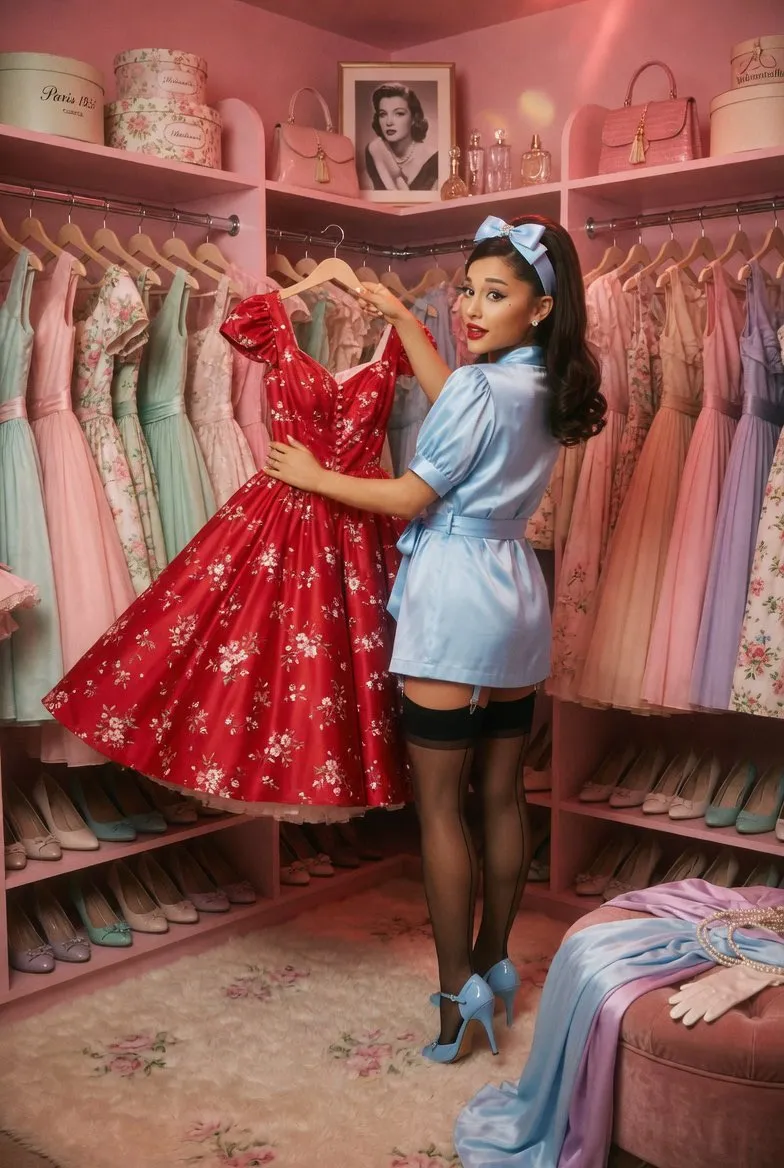
The postwar 1950s were a different story entirely. With rationing over and consumer culture exploding, fashion leaned hard into excess. The New Look — Christian Dior's 1947 silhouette that dominated the following decade — gave us the exaggerated hourglass: padded hips, tiny waists, full circle skirts that needed crinolines underneath to achieve their shape.
This is the era most people picture when they say "pin-up," and it's also where the most costume-y mistakes happen. The 1950s silhouette is specific. A circle skirt without a crinoline looks flat and wrong. A sweater set needs the right bra underneath to create that pointed, structured bustline that's so iconic to the period. The details that seem small — the length of a pencil skirt, the height of a pump's heel, the exact placement of a seam — are actually what sell the whole look.
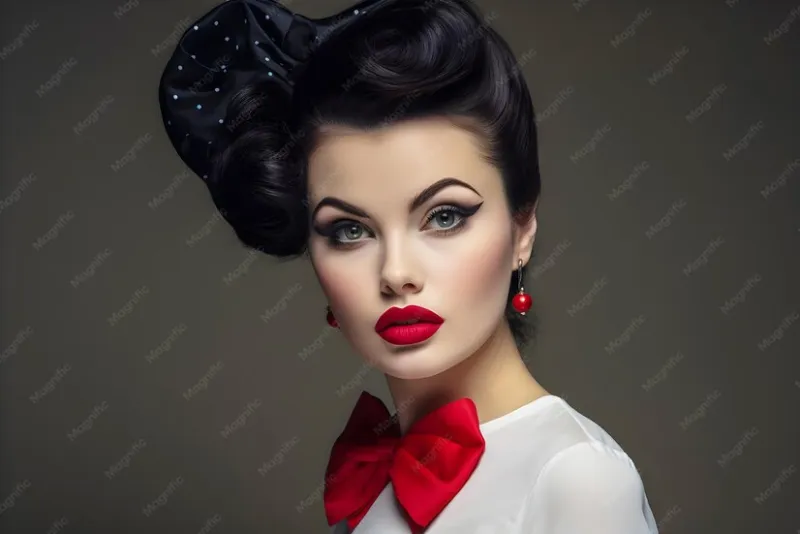
Makeup in the 1950s was architectural. Brows were defined and arched, not the thin pencil lines of the 1940s. Lips were fuller and more precisely outlined. Eyeliner was a tool for reshaping the eye rather than just defining it. If your 1950s shoot has contemporary "clean girl" brows or a blurred lip, the whole period illusion starts to crack.
What Historians and Veteran Photographers Actually Notice
Talk to anyone who's spent serious time studying mid-century fashion history and they'll tell you the same thing: fabric is the first giveaway. Modern synthetic blends drape and move differently than period-appropriate cotton, rayon, or wool crepe. You don't have to source actual deadstock vintage fabric for every shoot, but understanding how those materials behaved — the way a full rayon skirt swings versus a modern poly blend — helps you direct movement and posing more authentically.
Veteran pin-up photographers will also point to proportion as the biggest differentiator between "authentic" and "costume." Period garments were engineered around specific undergarments. A 1950s dress without the right foundation underneath won't sit right, won't photograph right, and won't evoke the era no matter how accurate the print or color. The corselette, the bullet bra, the garter belt — these weren't just lingerie, they were structural components of the entire look.
Another common note from those who've shot period-accurate work extensively: accessories are where most people cut corners, and accessories are where authenticity lives or dies. Gloves, the right style of earring for the specific decade, a handbag with the correct clasp style, shoes with period-accurate heel shapes — these details read in photographs even when viewers can't consciously name what they're seeing. They just know it looks right.
Doing the Research Without Getting Overwhelmed
You don't need a film studies degree to get this right. A few solid resources go a long way. Original issues of magazines like Life, Esquire, and early Playboy are goldmines for understanding how women were actually styled and photographed in each period — not the idealized illustration version, but the real photographic record. Many are available through library archives or digitized collections online.
Ebay and Etsy are genuinely useful for studying actual vintage pieces up close, even if you're buying reproductions for the shoot. Looking at how original garments are constructed — where the darts fall, how the waistband sits, what the zipper placement says about the year — builds an intuitive eye over time.
Fashion history accounts on social media have also become surprisingly rigorous resources. There's a whole community of vintage enthusiasts who will absolutely clock an anachronistic detail in your shoot and, more helpfully, explain exactly why it's off and what the period-correct version looks like.
Inspiration vs. Accuracy: Knowing Which Game You're Playing
Here's the thing — not every shoot needs to be a museum-quality recreation. Plenty of incredible pin-up work takes the spirit of the 1940s or 50s and runs with it in a more contemporary direction. That's a completely valid creative choice. The problem only arises when a shoot intends to be period-accurate but ends up looking like a costume because the homework wasn't done.
Knowing which game you're playing before you start is the most important step. If you're going for genuine historical authenticity, commit to the research and the details. If you're going for vintage-inspired with a modern twist, own that choice and let it show in the creative direction rather than accidentally landing in an uncanny valley between the two.
The women who defined pin-up across those decades were specific, vivid, and real products of their time. Honoring that — whether through strict accuracy or thoughtful interpretation — is what separates work that truly resonates from work that just looks like a theme party.