Own the Room: How to Step Into Every Pin-Up Shoot as a True Creative Partner
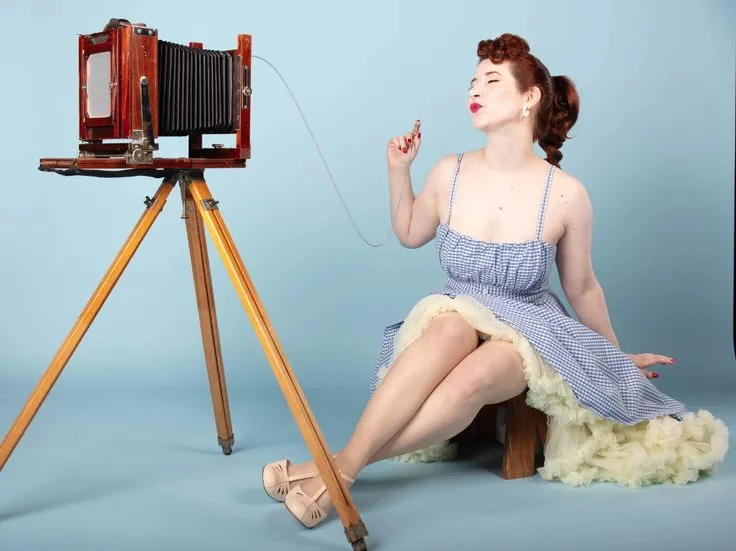
Photo: female model directing pin-up photo shoot with photographer in vintage studio, via i.pinimg.com
There's a version of pin-up modeling that looks like this: you show up, you do what you're told, you go home. The photographer calls every shot, picks every angle, and decides what the final image means. You're basically a very glamorous prop.
And then there's the other version — the one where you walk through that studio door with opinions, references, and a clear sense of what you want the camera to say about you. That version is a whole lot more interesting, and honestly, it produces better photos too.
Creative collaboration isn't just for photographers. If you're serious about pin-up as a craft — whether you're building a modeling portfolio, running an adult content platform, or just doing a once-in-a-lifetime shoot — understanding the visual language behind the work changes everything. You stop reacting and start creating.
Here's how to get there.
Start with Your Reference Board, Not Your Outfit
Most models think about wardrobe first. That's understandable — the clothes are the fun part. But the most effective pre-shoot prep starts somewhere else entirely: with images.
Pull together a reference board before you talk to your photographer about anything else. This doesn't have to be fancy — a Pinterest board, a Google Drive folder, even a camera roll full of screenshots works fine. The point is to gather images that feel like what you're going for. They don't all have to be pin-up. Vintage film stills, fashion editorials, old Hollywood glamour shots, even fine art photography can all point toward a mood.
When you bring that visual language to your photographer, two things happen. First, you give them something concrete to respond to — which is way more useful than saying "I want it to feel retro and sexy." Second, you signal that you've done the creative work, that you're a collaborator, not just a subject. Good photographers love that. It makes their job easier and the final images stronger.
Learn Enough About Light to Have a Conversation
You don't need a photography degree. But knowing a few basics about lighting will let you participate in decisions that used to feel completely out of your hands.
Soft light — think large diffused sources, window light, beauty dishes with diffusers — is flattering and dreamy. It's the classic pin-up look: smooth skin, gentle shadows, that warm glow that makes everything feel slightly nostalgic. Hard light creates drama. Defined shadows, strong contrast, a more editorial or even edgy feel. Neither is better; they just tell different stories.
When you're talking to your photographer before a shoot, ask what kind of lighting setup they're planning and why. If the answer doesn't match the mood on your reference board, say so. Something like, "I was picturing something softer — more like a 1950s glamour portrait than a dramatic editorial. Is that something we can work toward?" is a completely reasonable thing to say. You're not micromanaging. You're communicating.
Ask the Questions That Actually Matter
Pre-shoot conversations are where the real creative direction happens, and most models don't take full advantage of them. Instead of just confirming logistics — time, location, what to bring — use that conversation to dig into the vision.
Some questions worth asking:
- What's the intended final output? Social media content, a printed portfolio, a specific platform? The answer shapes everything from resolution to aspect ratio to how much negative space the photographer leaves in the frame.
- Are we going for a specific era? 1940s pinup has a different visual grammar than 1960s go-go glamour. Knowing where you're anchored helps you calibrate everything from your makeup to your expressions.
- How do you like to work with talent on posing? Some photographers direct heavily. Others prefer to let you move and capture what happens. Knowing their style helps you decide how much to bring versus how much to follow.
- What's your editing aesthetic? Heavy retouching, film grain, color grading — these choices shape the final image as much as anything that happens in the room.
These aren't diva questions. They're professional ones. Any photographer worth working with will appreciate them.
Develop Your Own Posing Vocabulary
Here's something a lot of models don't realize: the ability to suggest and adjust your own poses is a skill you can actually build. It's not just instinct.
Spend time in front of a mirror — or better yet, use your phone to take test shots — and experiment with angles, arm placement, the tilt of your chin, the arch of your back. Figure out what works for your specific body. What elongates your neck? What makes your waist look defined? Which angles feel both comfortable and striking?
When you know your own body's visual language, you can walk into a shoot and offer input instead of waiting to be arranged. "Can we try me with my weight shifted to the left and my chin dropped a little?" is the kind of direction that makes a photographer's day, because it means you're problem-solving together.
Classic pin-up poses have a logic to them — the S-curve, the over-the-shoulder glance, the seated leg cross that creates length. Study them, practice them, and then figure out how to make them yours. The best pin-up images aren't just technically correct. They feel inhabited.
Communicate in the Moment Without Killing the Energy
Creative direction doesn't stop when the shoot starts. But there's an art to speaking up in the middle of a session without derailing the flow.
Keep it brief and specific. "Can we try a tighter crop on this one?" or "I want to play with a more playful expression — less sultry, more mischievous" are the kinds of real-time notes that move things forward. Avoid long explanations mid-shoot. Save the deeper conversations for breaks.
Also, pay attention to the monitor or the photographer's face when they're reviewing shots. If they're excited, lean into what you were just doing. If they seem like they're searching for something, that's a good moment to offer a suggestion or ask what they're looking for.
The goal isn't to take over. It's to stay engaged and active as a creative presence rather than going passive once the camera starts clicking.
The Model Who Knows What She Wants Wins Every Time
Here's the bottom line: the pin-up world rewards women who show up with a point of view. That's true in the studio, and it's true everywhere else in this industry. Photographers want to collaborate with models who bring something to the table. Clients want to book talent who can articulate their own brand. Audiences connect with images that feel intentional.
Taking creative ownership of your shoots isn't about being difficult. It's about being serious. It's the difference between a model who happens to have great photos and an artist who creates them.
Know your aesthetic. Learn the language. Ask the smart questions. And walk into every shoot like the creative director you already are.