Curves, Content, and Cash: How to Turn Your Pin-Up Aesthetic Into a Real Business
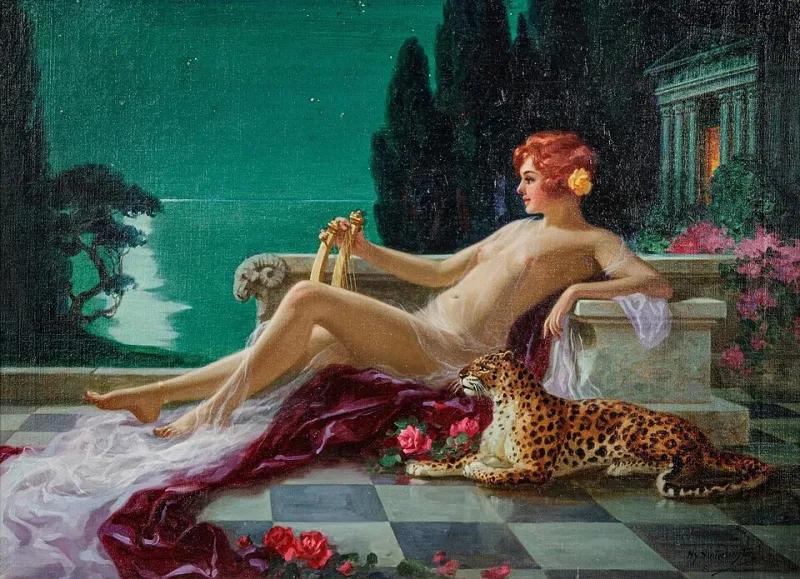
Photo: Henry Hintermeister, Public domain, via Wikimedia Commons
Let's be real for a second. Plenty of women have spent a Saturday afternoon curling their hair, slipping into a wiggle dress, and snapping photos in front of a ring light — only to wonder why the follower count stays flat and the inbox stays empty. The difference between a hobby and a brand isn't the quality of your lipstick. It's strategy.
Pin-up culture has never been more commercially viable than it is right now. Vintage aesthetics are everywhere — in fashion campaigns, in cosmetics ads, in music videos. But tapping into that demand as an independent creator means understanding something most modeling advice skips over entirely: you're not just a model. You're a media property. And media properties need a plan.
Start With Your Lane, Not Theirs
The biggest mistake new pin-up creators make is trying to do everything. Rockabilly. 1950s housewife chic. Noir femme fatale. Tropical tiki girl. These are all legitimate aesthetics, but trying to mix them all into one feed creates visual noise — and audiences scroll right past noise.
Your first job is to get specific. Not just "I do pin-up" but "I do sun-soaked, Californian 1960s beach pin-up with a modern feminist edge" or "I do Gothic Americana pin-up inspired by Route 66 roadside culture." The more specific your niche, the easier it is for the right audience to find you — and stay.
Think about what you already love. What music do you listen to? What movies do you rewatch? What corners of vintage Americana genuinely excite you? Authenticity isn't just good ethics; it's good marketing. Audiences can smell a manufactured persona from three scrolls away.
Build the World, Not Just the Look
Here's something that separates creators who grow from creators who stall: the ones who grow build a world, not just a wardrobe.
Your pin-up persona should have a consistent visual language — think color palette, recurring props, specific locations, even a signature pose or expression. But beyond the visuals, it should have a voice. How do you caption your posts? What stories do you tell? Do you share the behind-the-scenes chaos of a shoot, or do you lean into the polished fantasy?
Both approaches work. What doesn't work is inconsistency. If your feed swings between glamour queen and casual selfie mode with no connective tissue, you're not building a brand — you're just posting.
Consider creating a simple style guide for yourself. Document your color palette, your tone of voice, the three to five words you want people to associate with your name. Refer back to it every time you create content. It sounds corporate, but it works.
Monetization Isn't One-Size-Fits-All
A lot of aspiring pin-up creators assume the money comes from modeling gigs — getting hired by photographers, appearing in magazines, booking shoots. And sure, that's one path. But it's not the only one, and for independent creators, it might not even be the best one.
Here's a quick rundown of income streams that pin-up creators are actually using right now:
Subscription platforms. Sites that let fans pay monthly for exclusive content have been a game-changer for adult and glamour creators. The key is delivering consistent, high-quality content and making subscribers feel like they're part of something — not just buying photos.
Digital products. Posing guides, vintage hair tutorial videos, printable pin-up art — these can be sold repeatedly with zero ongoing effort once created. If you've developed real expertise in the aesthetic, package it.
Brand partnerships. This is where niche positioning pays off hard. A vintage lingerie brand, a retro cosmetics line, a rockabilly clothing company — these businesses are actively looking for creators who already live the aesthetic their customers aspire to. You don't need a million followers. You need the right followers and a media kit that tells a compelling story.
Workshops and community. Some of the most successful pin-up creators have built paid communities, online courses, or in-person events around their expertise. Teaching other women how to develop their own pin-up style is a legitimate business — and one that builds enormous loyalty.
The Media Kit No One Tells You to Build
If you want brand deals, you need a media kit. Full stop. This is a simple document — usually a PDF — that tells potential partners who you are, who your audience is, and what working with you looks like.
At minimum, yours should include: a short bio that captures your persona, your audience demographics (age, location, interests), your engagement rate across platforms, your content categories, and your rates or partnership options. Keep it visually consistent with your brand — fonts, colors, the whole thing.
Don't wait until you feel "big enough" to build one. Brands looking for micro-influencers (typically 10,000 to 100,000 followers) are often more interested in engagement and aesthetic fit than raw numbers. A creator with 15,000 highly engaged followers in the vintage fashion space is more valuable to a retro swimwear brand than someone with 200,000 general lifestyle followers.
Real Talk: What Actually Moves the Needle
Creators who've successfully turned their pin-up aesthetic into real income tend to share a few habits worth borrowing.
First, they show up consistently — not necessarily every day, but on a schedule their audience can count on. Algorithms reward consistency, and so do audiences.
Second, they engage genuinely. Responding to comments, asking questions, acknowledging their most loyal followers by name — it sounds small, but it's what turns casual followers into actual fans. Fans buy things. Followers don't always.
Third, they treat their business like a business. They track what content performs best. They test different formats. They reinvest some of their earnings into better equipment, better lighting, better wardrobe pieces that elevate the whole brand.
And fourth — maybe most importantly — they're patient. Building a sustainable income from a personal brand takes time. The creators who make it aren't always the most talented or the most conventionally beautiful. They're the most consistent and the most strategic.
The Takeaway
Pin-up as an aesthetic has lasted nearly a century because it taps into something genuinely powerful — the celebration of femininity, confidence, and a certain kind of joyful boldness. That's not going out of style anytime soon.
But if you want to turn that aesthetic into actual income, you need to think beyond the photoshoot. You need a niche, a visual identity, a content strategy, and multiple ways for money to flow toward you. None of it has to be complicated. It just has to be intentional.
The bedroom mirror is a great place to start. But the business starts the moment you decide to build something around what you see in it.