All in Your Head: The Real Reason Your First Pin-Up Shoot Feels Terrifying
There's a very specific kind of dread that settles in about 48 hours before a first pin-up shoot. You've booked the date, confirmed the look, maybe even bought new lingerie. And then your brain starts doing its thing — cycling through every possible way it could go wrong. What if you freeze up? What if the poses look ridiculous? What if you just... don't look like a pin-up model?
Here's the thing nobody tells you upfront: almost every model who's ever stepped in front of a camera for the first time has been through exactly that spiral. And almost every single one of them will tell you the same thing afterward — the anticipation was so much worse than the actual shoot.
So what's going on psychologically, and how do you get out of your own way before you even walk through the studio door?
Why Your Brain Treats a Photo Shoot Like a Threat
Anxiety, at its core, is your nervous system trying to protect you from something uncertain. The problem is that your brain doesn't always distinguish between a genuinely dangerous situation and one that just feels high-stakes. A pin-up shoot checks a lot of the boxes that trigger that response — you're putting your physical appearance on display, you're in an unfamiliar environment, and there's a permanent record being created.
Sarah, a pin-up photographer based out of Nashville who has shot over 400 clients in the past decade, says she sees the same pattern constantly. "Women will come in completely stiff, barely making eye contact, and I know exactly what's happening. They've spent a week building this up in their heads into something enormous. Within about fifteen minutes of actually being on set, something shifts. The thing they were afraid of turns out to not be the thing that happens."
That gap — between the imagined experience and the real one — is sometimes called the affective forecasting error. Basically, we're not great at predicting how we'll actually feel during an event. We tend to overestimate the negative and underestimate our own adaptability. In the context of a pin-up shoot, that means the version of you that shows up nervous is usually not the version that walks out the door afterward.
The Fantasy vs. The Reality of Being on Set
A lot of first-timers arrive with a mental image of what a shoot will look like — and it's usually either a glamorous Hollywood production or something uncomfortably clinical. Neither is quite right.
Most professional pin-up shoots are genuinely pretty casual. There's usually music playing. The photographer talks you through poses instead of expecting you to already know them. There's a lot of laughing, repositioning, and collaboration. It's less "be perfect" and more "let's figure out what works for you."
Jamie, a model from Chicago who now shoots regularly for several pin-up publications, remembers her first shoot vividly. "I was convinced I was going to look stiff and awkward in every single photo. I kept thinking, I'm not a model, I don't know how to do this. But the photographer just kept giving me small adjustments — tilt your chin here, shift your weight there — and suddenly there were these photos of me that looked like... me, but more. It wasn't a transformation into someone else. It was just me with better lighting and someone paying attention."
That's actually a huge part of what makes pin-up photography different from other styles of portrait work. The aesthetic has a built-in vocabulary — specific poses, expressions, and styling cues — that gives both the photographer and the model a shared language to work from. You're not starting from zero. You're working within a framework that's been refined over decades.
What Experienced Models Wish They'd Known Earlier
We asked a handful of models who've been shooting for a few years to name the one thing they wish someone had told them before their first session. The answers were pretty consistent.
You don't have to look like you know what you're doing. The poses that look effortless in finished photos almost always involve a lot of trial and error in real time. What reads as confident on camera is often the result of a photographer coaching someone through six slightly different versions of the same pose until one clicks.
The camera is more forgiving than your mirror. Your bathroom mirror shows you a static, often harshly lit version of yourself at rest. A camera captures movement, light, and expression in a completely different way. Most people are genuinely surprised — in a good way — when they see their proofs.
Nervousness actually photographs well sometimes. There's a kind of aliveness that comes through in early shots when someone's adrenaline is still running high. Some photographers actively prefer working with people in that state because the energy is real.
It gets easier fast. Not over months — over the course of a single shoot. By the second hour, the vast majority of first-timers have relaxed enough that their later shots look completely different from their early ones.
Practical Ways to Close the Gap Before You Arrive
None of this means you have to just white-knuckle it through the anxiety and hope for the best. There are real, practical things you can do in the days leading up to a shoot that make a measurable difference.
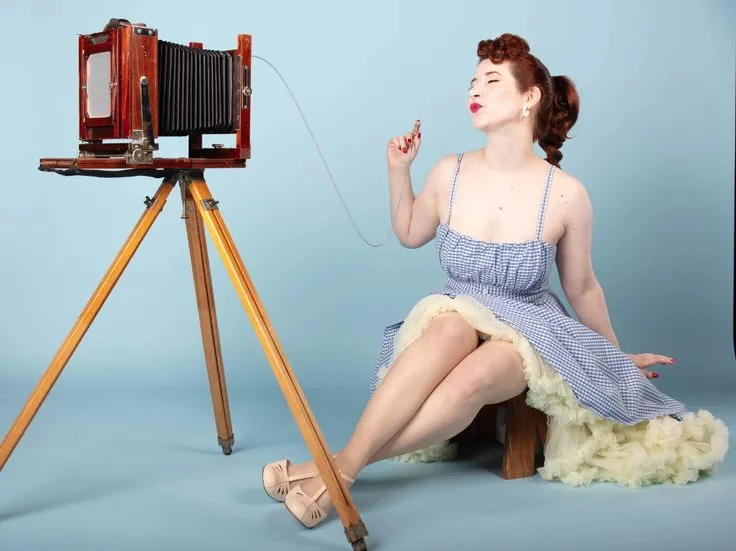
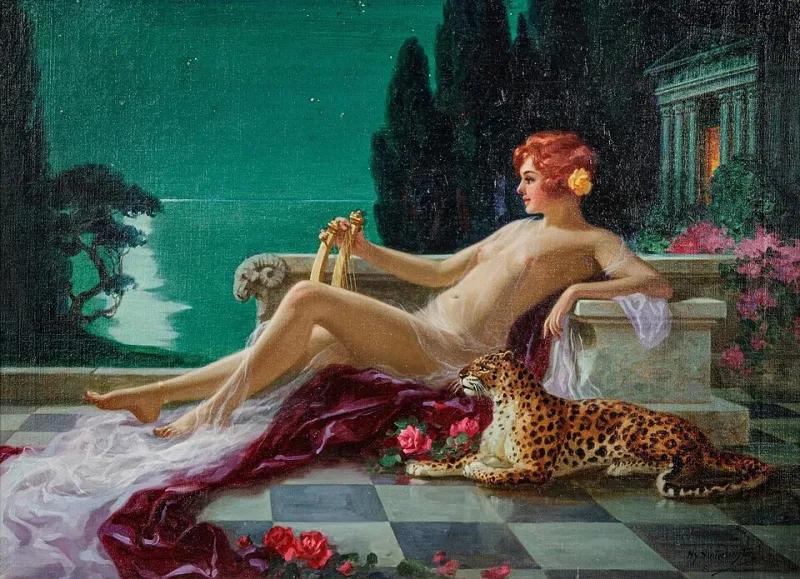
Get familiar with the poses beforehand. Spend some time looking at classic pin-up references — Betty Grable, Bettie Page, the Vargas girls — and practice in front of a mirror. Not to be perfect, but to make the movements feel less foreign when you're on set.
Talk to your photographer ahead of time. A quick phone call or even a few messages exchanged before the day can dramatically reduce the feeling of walking into an unknown situation. Ask about the flow of the shoot, what to bring, what to expect. Good photographers welcome this.
Do something physical the morning of. A walk, a yoga class, even just some stretching. Physical movement burns off cortisol and helps your body shift out of the fight-or-flight state that anxiety produces.
Give yourself permission to be awkward at first. Seriously. Build it into your expectations rather than trying to avoid it. The first twenty minutes might feel clunky. That's fine. It almost always does.
The Other Side of the Shoot
Ask anyone who's done it — there's a specific feeling that happens after a pin-up shoot wraps. It's not quite like anything else. Part relief, part surprise, part something harder to name. A lot of models describe it as feeling more comfortable in their own skin, at least for a while.
That's not an accident. Pin-up photography, at its best, is about attention — someone skilled and intentional pointing a lens at you and working to find the most compelling version of what you already are. That experience tends to recalibrate how you see yourself, even if just a little.
The fear before the shoot is real. So is what's waiting on the other side of it.