Chemistry Before the Click: Finding a Pin-Up Photographer Who Actually Gets You
Let's be honest — the photographer you choose for a pin-up shoot matters way more than most people admit when they're first starting out. You can have the perfect vintage wiggle dress, the most immaculate winged liner, and a playlist that puts you in exactly the right headspace, and still walk away with images that feel completely off. Nine times out of ten, that disconnect comes down to one thing: the wrong creative partnership.
Finding your ideal photographer in the pin-up world isn't just a logistical task. It's one of the most important creative decisions you'll make, and it deserves a lot more thought than scrolling through Instagram until something catches your eye.
Start With the Portfolio — But Look Beyond the Pretty Pictures
Every photographer has a portfolio. The question is whether you're actually reading it or just reacting to it.
When you pull up someone's work, your first instinct is probably to notice whether the images are technically polished — good lighting, sharp focus, flattering composition. That stuff matters, obviously. But for pin-up specifically, you want to dig a layer deeper.
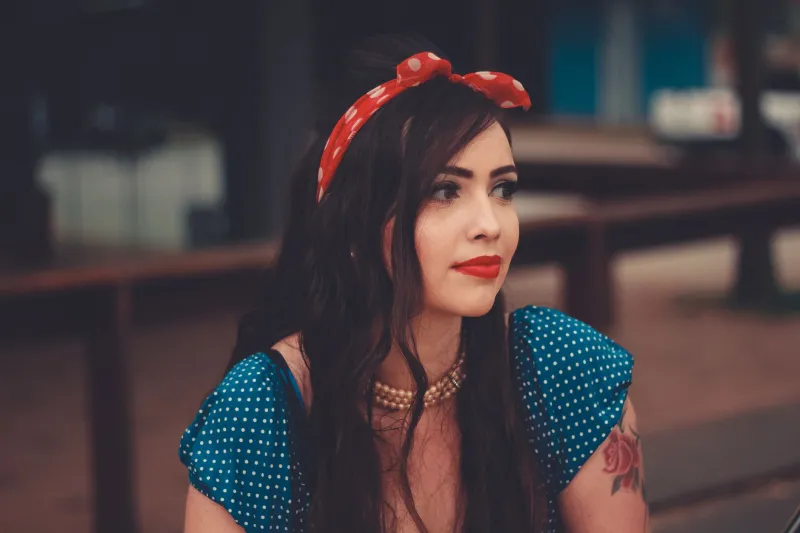
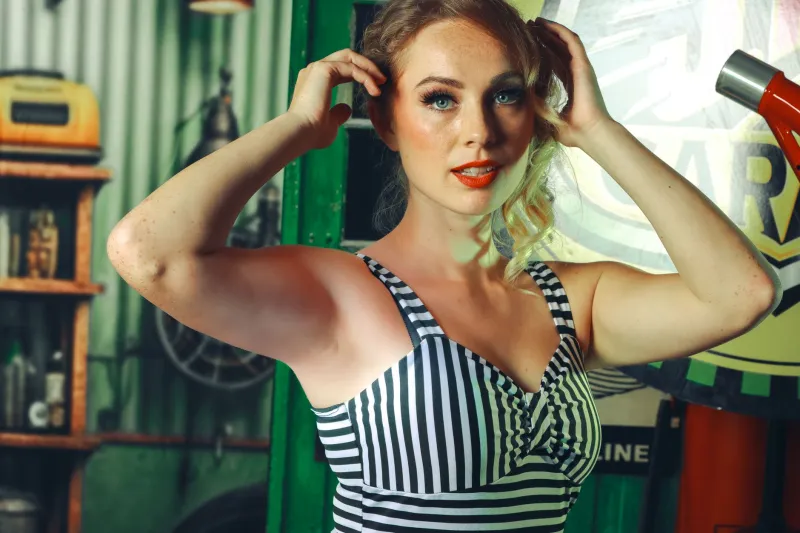
Ask yourself: do these images have a point of view? Pin-up photography has a rich visual language built on playfulness, sensuality, and a very specific kind of confidence. A photographer who understands that language will show it consistently across their portfolio. You'll see intentional styling choices, poses that feel dynamic rather than stiff, and a tonal quality that reads as glamorous without feeling sterile.
Also pay attention to range. Does every model in their portfolio look like a variation of the same person? That can be a sign that the photographer has a strong personal aesthetic — which isn't necessarily bad — but it might mean your individual features and personality won't get much room to breathe. The best pin-up photographers know how to honor the genre while making each subject feel entirely themselves.
The First Conversation Tells You Almost Everything
Once you've identified a few photographers whose work resonates with you, reach out — and pay close attention to how that first exchange goes.
A photographer who's genuinely invested in collaborative work will ask questions. They'll want to know what drew you to pin-up, what era or aesthetic you're gravitating toward, whether you have reference images, and what you're hoping to feel when you look at the final shots. That last one is huge. A photographer who asks about feeling rather than just look is someone who understands that the emotional core of a great pin-up image is what separates it from a costume photo.
On the flip side, watch for photographers who immediately launch into a monologue about their own process without showing much curiosity about yours. It's not a dealbreaker on its own, but it's worth noting. You want someone who sees this as a two-way creative conversation, not a transaction where you show up and execute their vision.
Also, notice how they handle boundary-setting early on. Do they proactively talk about what they typically shoot and what falls outside their scope? Do they invite you to share your own comfort levels? That kind of transparency at the outset is a really good sign.
Artistic Philosophy: More Than Just Aesthetics
This one gets overlooked constantly, and it shouldn't. You and your photographer don't need to have identical taste, but you do need to have compatible values around what pin-up actually is.
Pin-up at its best is celebratory. It's about confidence, playfulness, and a very particular kind of self-possession. Some photographers approach it from that angle — they're drawn to the empowerment aspect, the theatrical quality, the way it lets subjects inhabit a version of themselves that's fully amplified. Others approach it more as a technical or historical exercise, focused on period accuracy and visual precision.
Neither approach is wrong, but they produce very different experiences on set and very different images. If you're someone who wants to feel genuinely seen and celebrated during your shoot, you need a photographer whose philosophy aligns with that intention. If you want something more editorial and precise, you want someone who geeks out on the details.
The easiest way to figure this out? Ask them directly. Something like, "What do you love most about shooting pin-up?" will tell you more than any portfolio deep-dive. Their answer — and the enthusiasm (or lack of it) behind it — will give you a clear window into whether this is someone who'll be energized by working with you or just going through familiar motions.
Red Flags Worth Taking Seriously
The pin-up world, like any creative space that involves intimacy and vulnerability, has its share of people who don't handle that responsibility well. Here are a few things to watch for before you ever step in front of someone's lens.
Vague or dismissive responses to boundary conversations. If you mention that you're not comfortable with certain types of shots and the photographer gets evasive or tries to reframe it as "loosening up" or "trusting the process," walk away. Full stop.
Pressure to book before you're ready. Urgency tactics — limited availability windows, implied competition from other models, discounts that expire immediately — are manipulation tools, not sales skills. A photographer confident in their work will give you space to make a considered decision.
Portfolios that feel like they're missing model personality. If every subject in their portfolio looks a little blank behind the eyes, that's worth thinking about. Great pin-up photography captures something alive in the subject. If that quality is consistently absent, it may reflect how the photographer relates to the people they shoot.
Resistance to pre-shoot communication. Some photographers want to "keep it spontaneous" as a way of avoiding the collaborative planning conversation entirely. While a loose, playful energy on set is genuinely valuable, that's different from walking in with no shared understanding of direction, tone, or limits.
Building Something Real
When you find the right photographer, you'll probably know it before the shoot even happens. There'll be a quality to the planning conversations — a sense of mutual excitement, a shared language around what you're building together. That energy carries directly into the images.
The pin-up aesthetic has endured for decades because it captures something true about the relationship between subject and lens. It's not just about how someone looks. It's about how they feel, and whether the person behind the camera is skilled enough — and invested enough — to translate that feeling into something lasting.
Take your time finding that person. The right photographer isn't just a service provider. They're a creative collaborator, and the work you make together is worth getting the match right.